

Monthly benchmark tracking indicative export pricing for African-origin superfoods across major importing regions.
The Lubembo Intel Index aggregates transaction-verified quotes, buyer inquiries, exporter benchmarks, and on-the-ground trade signals from Central, West, and East Africa.
Despite persistent macro noise — currency volatility, European economic stagnation, and growing discussions around global de-dollarization — most African superfood export prices have remained remarkably stable during Q1–Q2 2026.
This reflects a simple structural truth:
These are still supply-constrained products, not speculative commodities.
AFRICAN SUPERFOODS PRICE INDEX (APRIL 2026)
Indicative FOB Africa pricing
| Product | Form | Western Europe | Eastern Europe | Gulf (UAE / KSA) | United States |
|---|---|---|---|---|---|
| Baobab | Powder (80 mesh) | $10.5 – $14 / kg | $8.5 – $11 / kg | $11 – $15 / kg | $9.5 – $13 / kg |
| Hibiscus | Whole / Cut | $6 – $8 / kg | $4.5 – $6.5 / kg | $6.5 – $9 / kg | $5 – $7 / kg |
| Moringa | Leaf Powder | $8 – $11 / kg | $6 – $8 / kg | $9 – $12 / kg | $7 – $10 / kg |
| Raw Honey | Bulk (Drums) | $3.8 – $5.5 / kg | $3 – $4.5 / kg | $4.5 – $6 / kg | $4 – $6.5 / kg |
| Ginger | Dried / Powder | $4 – $6 / kg | $3 – $4.5 / kg | $4.5 – $6.5 / kg | $4 – $6 / kg |
*Indicative pricing derived from exporter quotes, active buyer inquiries, and Lubembo trade network benchmarks.
APRIL 2026 — MARKET SIGNALS
1. Prices remain surprisingly stable
Despite global macro concerns, superfood export pricing has remained largely unchanged in the past quarter.
Why?
Because these markets are still driven by real supply constraints, not speculative futures markets.
Superfoods do not yet trade on organized exchanges — meaning price discovery happens through direct buyer-producer negotiations, which tends to dampen volatility.
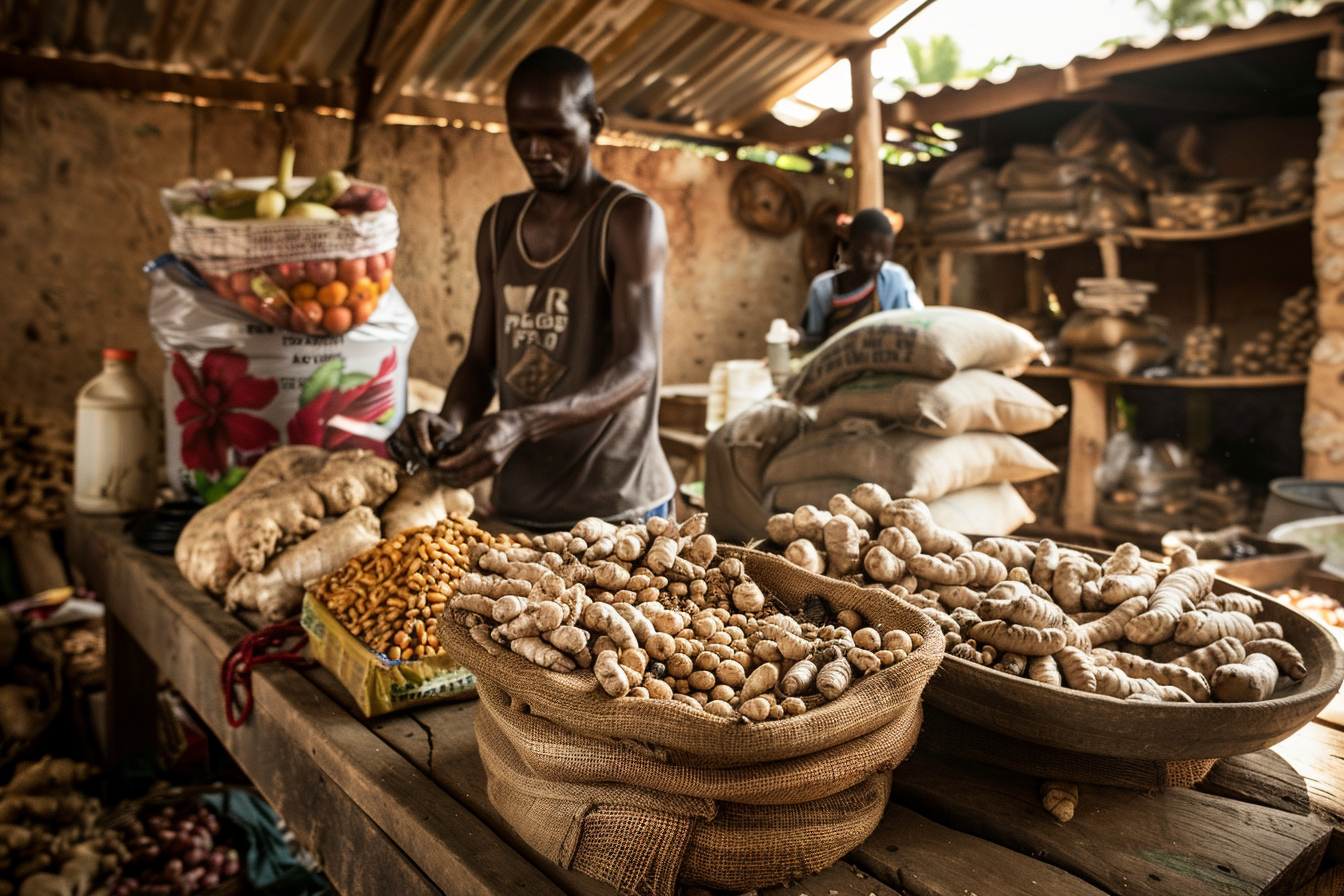
2. Ginger markets currently range-bound
Global ginger markets are currently sideways with moderate demand, as buyers wait for clearer signals on crop output and logistics costs.
European markets remain relatively firm while North American prices have softened slightly due to broader supply availability.
This is consistent with Lubembo Intel field observations:
ginger remains one of the most price-stable superfood commodities globally.
3. Honey demand continues to grow
The global honey market is expected to expand significantly this decade, driven by:
- functional foods
- beverage innovation
- natural sweetener demand
The industry is projected to grow from $9.7B in 2026 to $14.7B by 2035.
This explains why honey continues to attract non-traditional buyers, particularly in fermentation and beverage markets.
4. Europe remains certification-driven
European markets still offer the highest premiums for certified products.
However, buyers continue pushing down prices where:
- documentation is incomplete
- testing standards are unclear
- traceability is weak
In practical terms:
documentation now moves price more than geography.
ORIGIN WATCH — AFRICAN SUPPLY SIGNALS
| Origin | Climate Resilience | Production Readiness | Export Readiness |
|---|---|---|---|
| DRC | High | Low–Medium | Improving |
| Kenya | Medium | High | High |
| Ghana | Medium | High | High |
| Senegal | Medium | High | High |
| Nigeria | Medium | Medium | Improving |
One structural paradox continues to define African supply chains:
The most climate-resilient regions often have the weakest export infrastructure.
Meanwhile, countries with stronger export logistics sometimes face increasing climate variability.
This mismatch will likely define the next decade of African agricultural trade.
INTERPRETING THE INDEX
Each region reflects a different buyer psychology:
Eastern Europe
Price-sensitive, trading-oriented buyers.
Western Europe
Certification-heavy buyers with strict compliance requirements.
Gulf markets
Reliability-driven buyers prioritizing stable supply.
United States
Processing-driven buyers (CPG, supplements, beverages).
Understanding where you are selling matters as much as what you are selling.
ABOUT THE LUBEMBO INTEL INDEX
The Lubembo Intel African Superfoods Index tracks pricing signals across emerging agricultural exports from Africa.
It is designed for:
- producers
- buyers
- processors
- investors
- development institutions
who need transaction-level market visibility, not theoretical commodity reports.
Trade African superfoods with us at lubembo.co
For deeper market intelligence subscribe at lubembointel.com
Follow Lubembo for ground-truth market insights.


