

Why the real bottleneck in African agricultural exports isn't production — it's what happens after harvest.
The Misdiagnosis
Walk into any development conference on African agriculture and you'll hear the same framing: Africa needs to produce more. Increase yields. Expand hectares. Train more farmers.
The assumption is that the continent's agricultural challenge is fundamentally a production problem.
But spend time inside actual export supply chains — moving honey from Congo, hibiscus from Senegal, moringa from Ghana — and a different picture emerges.
Farmers are producing. In many regions, they're producing far more than the market is absorbing.
What's missing isn't crops. What's missing is the infrastructure that transforms those crops into export-ready ingredients.
The bottleneck isn't at the farm gate. It's at the processing layer — the drying facilities, the grinding operations, the filtration systems, the quality testing labs, the packaging lines.
Without that layer, production stays local. With it, production becomes trade.
What Processing Actually Means
When we talk about processing in agricultural exports, we're not talking about industrial manufacturing.
We're talking about the steps required to make a raw agricultural product meet international buyer specifications:
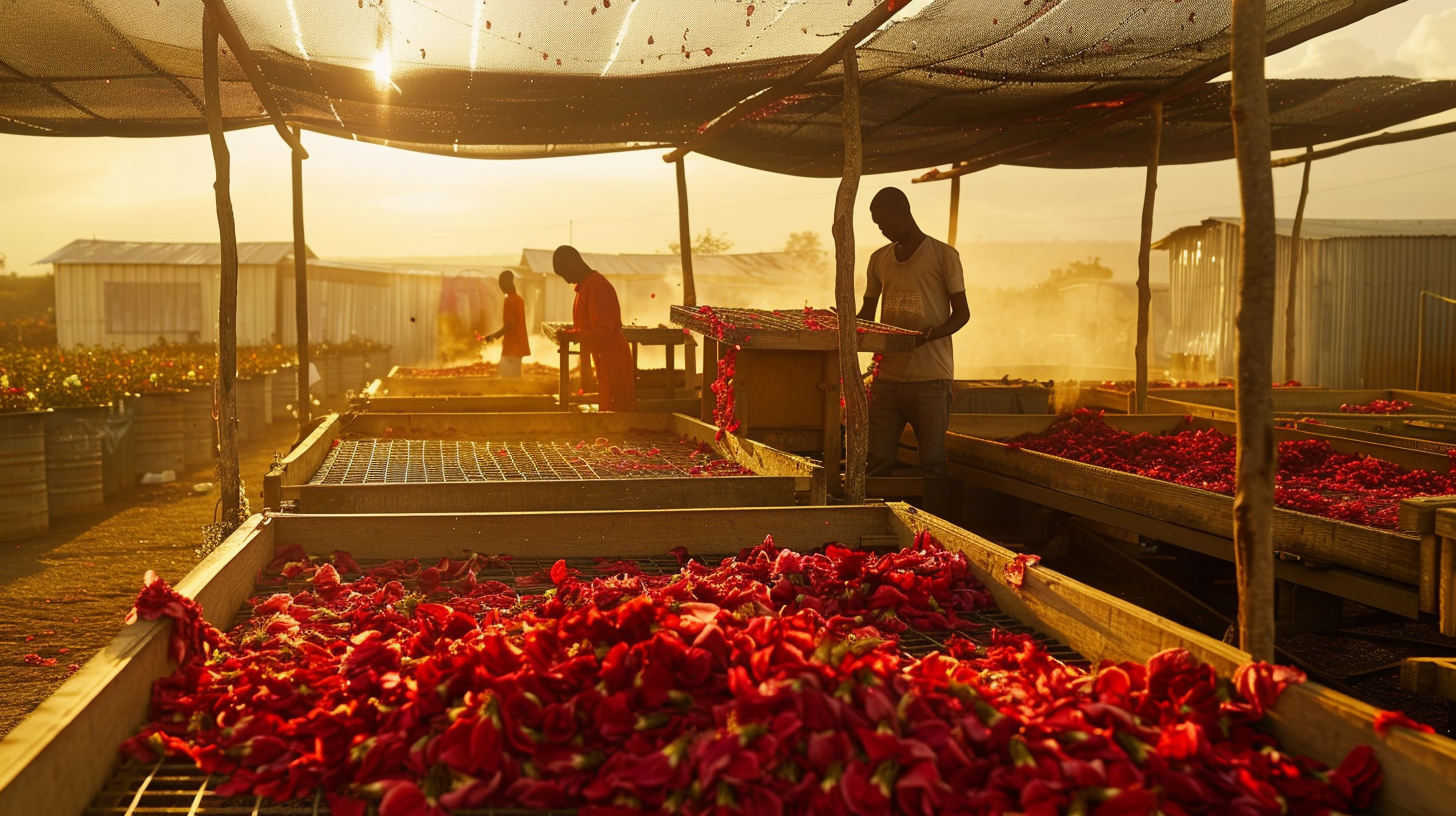
Drying — reducing moisture content to prevent fermentation, mold, or degradation during transit. Honey that isn't properly dried ferments. Hibiscus that isn't dried quickly enough loses color. Moringa leaves that aren't processed within hours of harvest oxidize and lose nutritional value.
Grinding and powder production — converting raw materials into standardized powders with consistent mesh size, color, and composition. A buyer in Germany doesn't want moringa leaves. They want 80-mesh powder with a specific chlorophyll profile.
Filtration and stabilization — removing impurities, standardizing viscosity, ensuring shelf stability. Raw honey contains wax, pollen, and debris. Export-grade honey requires filtration and moisture control.
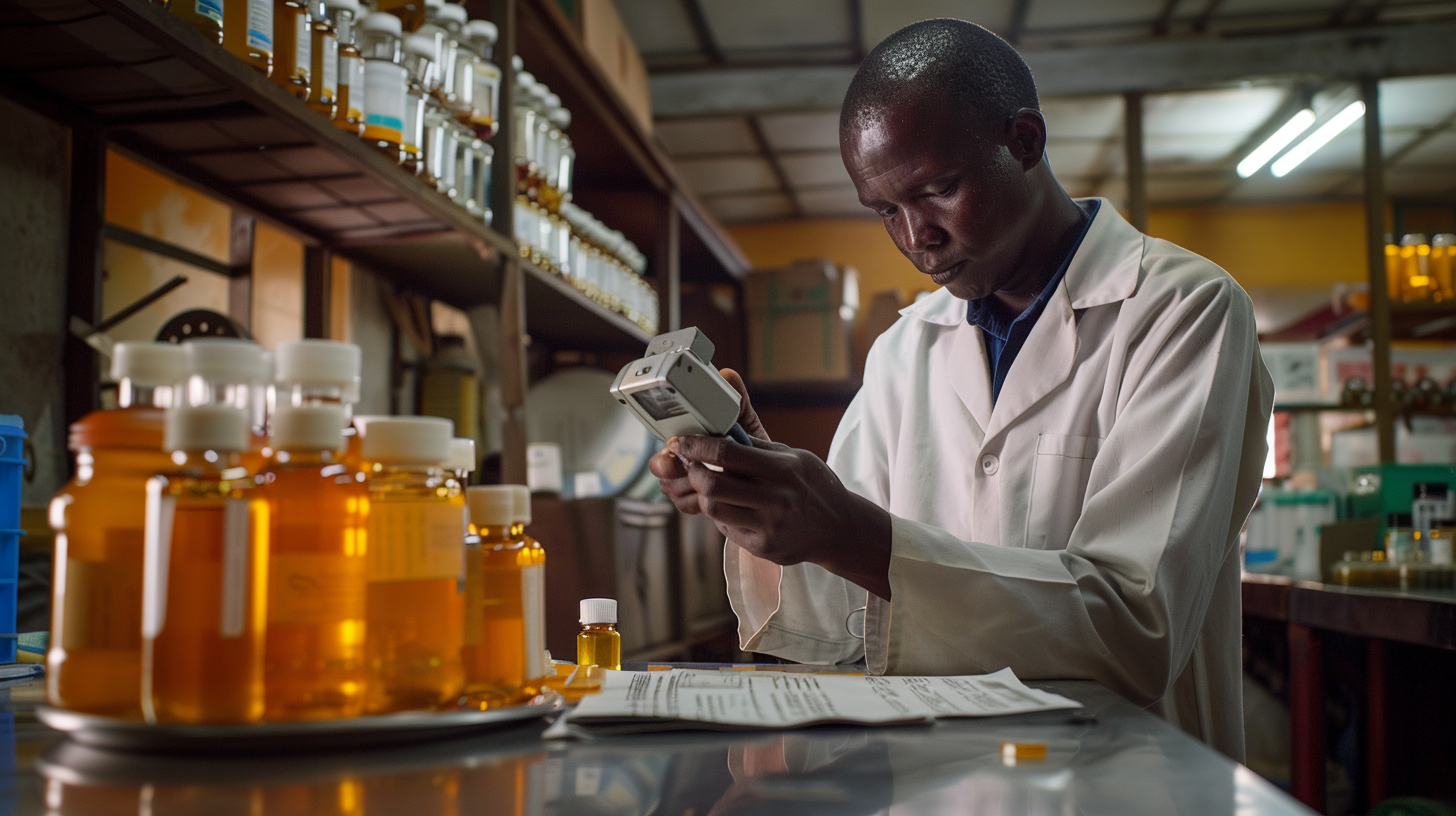
Quality testing — verifying that products meet food safety standards, pesticide residue limits, and nutritional claims. Without accredited testing, products cannot enter regulated markets.
Packaging — food-grade containers, proper labeling, documentation that satisfies import authorities. A beautiful product in the wrong packaging gets rejected at customs.
Each of these steps requires equipment, expertise, and facilities that most African production zones don't have.
The Pattern Across Superfood Supply Chains
This isn't a honey problem. It's a pattern that repeats across every botanical export category we track.
Honey
DRC's Congo Basin holds enormous honey production potential. Cooperatives in Kongo-Central produce 16-18 tonnes annually with minimal infrastructure. But most of that honey never reaches export markets.
Why? Moisture content too high. No filtration capacity. No export-grade packaging. No quality certification.
The honey exists. The processing infrastructure doesn't.
Hibiscus
Nigeria and Senegal produce massive quantities of hibiscus flowers. The product is in demand — kombucha brands, tea companies, and beverage manufacturers all want it.
But export quality depends almost entirely on post-harvest handling. How quickly were the flowers dried? What temperature? How were they sorted? Were they protected from contamination?
Farmers who harvest hibiscus often have no control over these variables. The processing happens elsewhere — or doesn't happen at all.
Moringa
Moringa grows abundantly across East and West Africa. The leaves are nutritious. The demand exists.
But moringa powder requires processing within hours of harvest to preserve color and nutritional content. It requires drying at controlled temperatures. It requires grinding to precise specifications.
Countries that grow moringa often export it to India or other processing hubs — where the value addition happens and the margin is captured.
Baobab
Baobab trees are endemic to multiple African countries. The fruit contains high-value pulp used in supplements, beverages, and cosmetics.
But pulp extraction and standardization require specific equipment. Without it, baobab fruit remains a local resource rather than an export commodity.
The pattern is consistent: production zones are not the same as export zones. The countries that grow often aren't the countries that process. And the margin flows to whoever controls the processing layer.
The Geography of Processing
Processing capacity doesn't distribute evenly across the continent.
It concentrates in specific hubs where:
- Logistics infrastructure exists — proximity to ports, airports, reliable power
- Export certification systems operate — accredited labs, phytosanitary authorities, documentation capacity
- Buyers and exporters are located — the trading companies that connect production to international markets
Kenya is the clearest example. As we've covered before, Kenya has become East Africa's trading desk — not because it produces more than its neighbors, but because it processes, packages, and exports what others produce.
Cocoa from DRC goes through Beni to get processed in Nairobi. Coffee from Uganda gets certified in Mombasa. Superfoods from across the region route through Kenyan facilities before reaching international buyers.
This creates a structural pattern: production happens in one geography, value capture happens in another.
For farmers in production zones, this means their crops often leave as raw materials and return as finished products — at prices they can't afford.
Why This Matters for Investors and Exporters
The strategic implication is significant.
For investors: The conventional thesis focuses on production potential. Where do crops grow? What are the yields? How much land is available?
But production potential without processing capacity is stranded value. The real leverage often lies in the infrastructure that sits between farms and ports — the aggregation centers, the drying facilities, the packaging operations, the quality labs.
Investing in a farm that can't process is investing in a product that can't move.
For exporters: Understanding where processing capacity exists determines where supply chains should be structured.
If you're sourcing moringa from Tanzania but processing capacity is in Kenya, your supply chain needs to account for that. Your costs, your timelines, your quality control — all of it shifts based on where the processing happens.
For buyers: The question isn't just "can this supplier produce?" It's "can this supplier process to spec?"
A supplier who grows excellent hibiscus but dries it poorly will fail your quality standards every time. Processing capacity is as important as production capacity in supplier evaluation.
The Strategic Takeaway
Africa's agricultural future will not be determined only by farmland expansion.
Yields can increase. Hectares can expand. Farmer training can improve.
But without the processing layer — the drying, the grinding, the testing, the packaging — those gains stay local. They don't become exports. They don't capture value. They don't build industries.
The question that matters: who builds the infrastructure between farms and global markets?
The countries and companies that answer that question will capture the margin. Everyone else will remain raw material suppliers — watching their products leave as commodities and return as branded goods.
Africa doesn't have a farming problem. It has a processing problem.
And solving it requires investment in the least glamorous, most essential layer of the supply chain: the facilities that turn harvests into trade.
Lubembo Intelligence tracks how agricultural commodities actually move from African farms to global markets — including where processing bottlenecks determine what reaches buyers and what doesn't. Subscribe for trade analysis across honey, hibiscus, moringa, baobab, and emerging botanical exports.


