

What the Lobito Corridor Teaches Agribusiness About Scaling in DRC
The Democratic Republic of Congo (DRC) does not lack land. It does not lack farmers. What it lacks is corridors that work for agribusiness the way they work for mining.
This is not a political statement. It is an observation from the ground.
Walk through any agricultural zone in Kwilu, Équateur, or Kongo-Central and you will find the same pattern: smallholders producing quality product—honey, baobab, moringa—that never reaches export markets at scale. Not because of quality. Not because of demand. Because the infrastructure between production and port does not exist in any form that makes unit economics work.
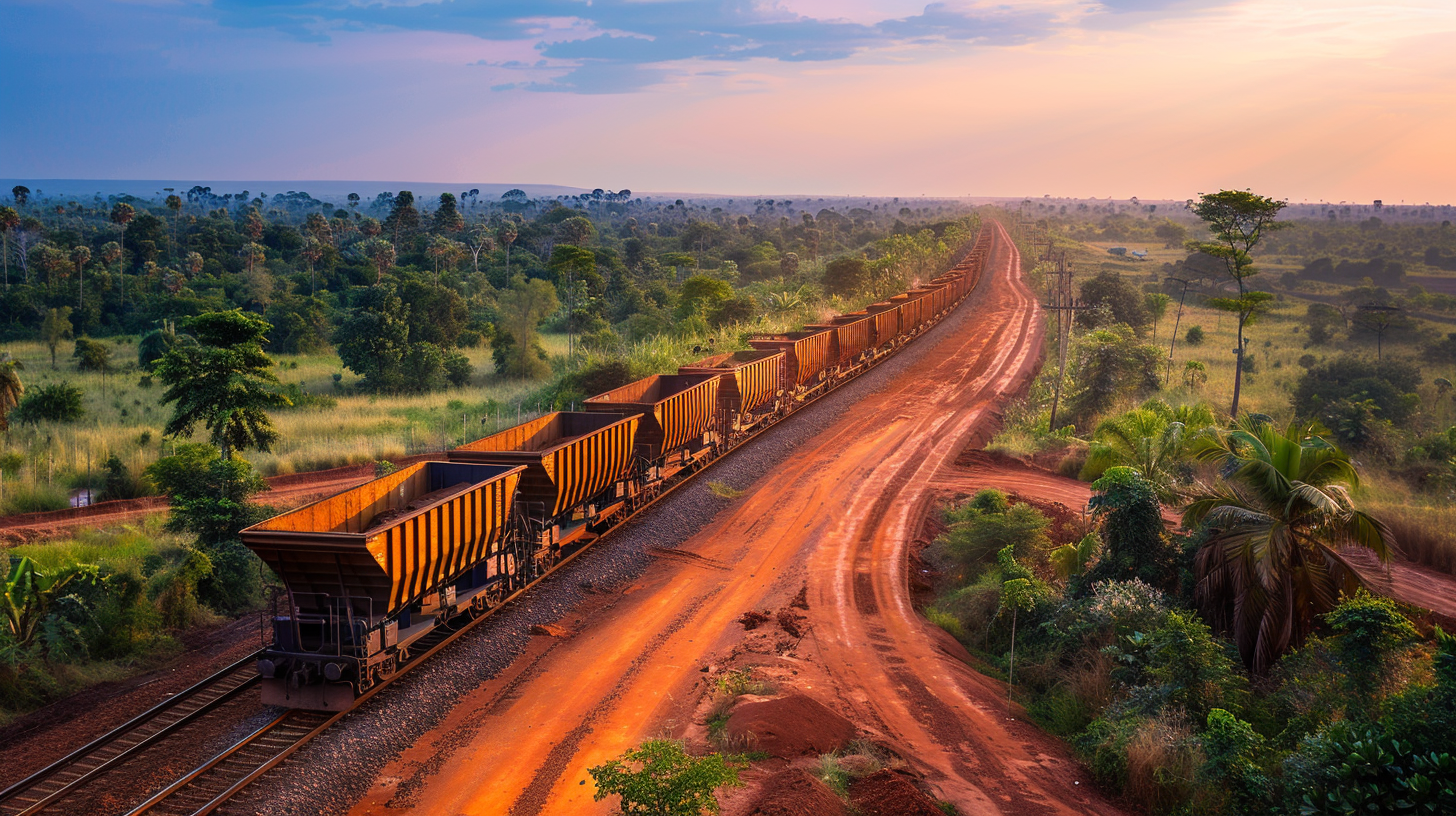
Meanwhile, 1,400 kilometers south, copper and cobalt move from pit to port with increasing efficiency. The difference is not natural endowment. The difference is corridor logic.
What Mining Solved
Mining is the only sector in DRC that has successfully forced infrastructure, energy, and logistics into alignment. This is not because mining is favored by policy—though it often is—but because mining operates on economics that demand predictability.
Consider what the major mining operations in the Copperbelt have accomplished:
- Energy commitments came first. Before scaling production, operators secured power. Ivanhoe's Kamoa-Kakula complex—now one of Africa's largest copper mines with 600,000+ tonnes annual capacity—recently signed a power purchase agreement with CrossBoundary Energy for a 222 MWp solar facility with 526 MWh battery storage. This is the first solar-plus-battery base load project of its kind in Africa, designed to deliver 30MW of guaranteed round-the-clock power. The message: you cannot scale extraction without first solving energy.
- Processing was built close to extraction. The same logic applies across the Copperbelt. Glencore's Kamoto Copper Company targets 300,000 tonnes of copper and 30,000 tonnes of cobalt annually—processed on-site before export. CMOC's Tenke Fungurume and Kisanfu operations produced 114,000 tonnes of cobalt in 2024 alone, 31% above projected capacity. The processing happens where the resource is, not where the buyer is.
- Logistics were designed backwards from export. This is the critical insight. Mining companies did not build roads and then hope buyers would come. They secured offtake agreements first, then built the logistics to fulfill them. In 2023, Ivanhoe shipped its first copper through Angola's Lobito port—cutting transit time and cost compared to routing through South Africa, Tanzania, or Mozambique.
- Volume was aggregated before access was negotiated. No mining company approaches infrastructure alone. The economics only work at scale. This is why the DRC's three largest cobalt producers—CMOC, Glencore, and Eurasian Resources Group—together handled 85% of the country's cobalt exports in 2024.
The pattern is clear: energy → processing → logistics → scale. In that order.
The Lobito Corridor as Shared Infrastructure
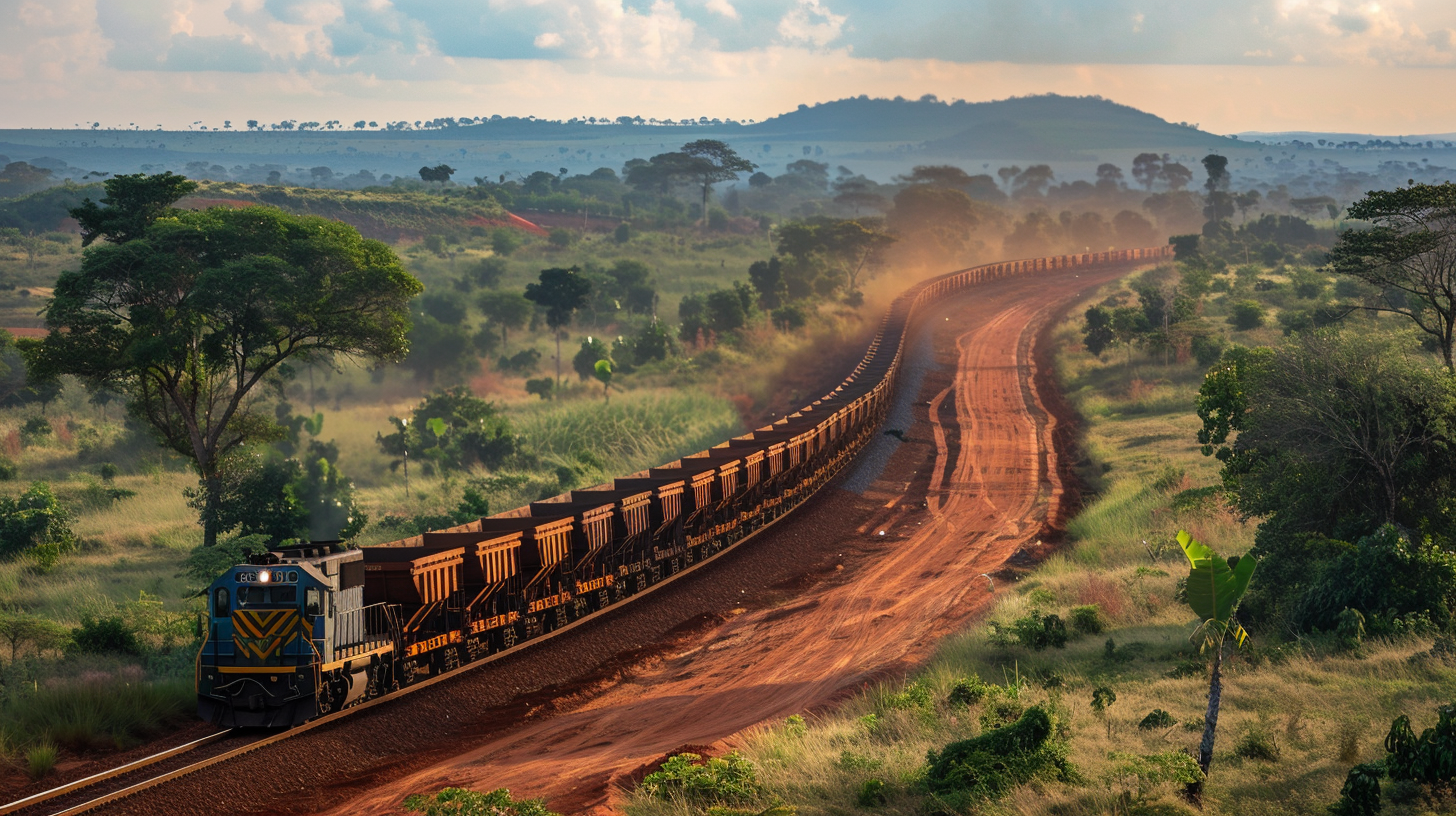
The Lobito Corridor is a 1,300-kilometer rail and infrastructure axis connecting Angola's Atlantic port of Lobito to the mineral-rich regions of southern DRC and Zambia. Built originally in the early 1900s to move colonial commodities, it fell into disrepair during decades of conflict. Now it is being rebuilt—not for agriculture, but for minerals.
The numbers are significant:
- $6+ billion in total committed investment from the US, EU, African Development Bank, and private sector consortia
- $4 billion from the United States alone, including a $553 million DFC loan to upgrade the 1,300km Benguela Railway
- €2 billion from the EU under its Global Gateway framework
- $455 million committed by the Trafigura-Mota-Engil-Vecturis consortium, which won a 30-year concession in 2023
The corridor will never be built for baobab. But baobab does not need to build it.
Here is what matters for agribusiness operators: the Lobito Corridor is not just rail. It is an integrated system of rail + roads + energy + trade facilitation. The African Development Bank has already announced $370 million for three agriculture projects along the corridor, designed to facilitate regional trade and food security. A €381.5 million road upgrade will improve 186 bridges and strengthen transport links between Angola, DRC, and Zambia.
The corridor directly serves mineral zones in southern DRC—Haut-Katanga and Lualaba provinces. But its logistics and energy investments create spillover access points for adjacent agricultural value chains.
This is the reframing that matters: corridor logic is infrastructure logic. Agricultural value chains that align with corridors can draft behind investments they could never justify alone.
Superfoods Through the Bottleneck Lens
At Lubembo Intel, we assess agricultural opportunities through a simple framework: where is the bottleneck? For most DRC superfoods, the bottleneck is not production. It is post-harvest processing and logistics.
Honey
The global honey market reached approximately $9-11 billion in 2024 and is projected to grow at 5-7% annually through the early 2030s. DRC honey—particularly from forest zones in Congo Basin, Bandundu, Équateur, and Kongo-Central—commands premium prices when it reaches export markets. The constraint is not beekeepers. The constraint is aggregation, moisture control, and cold chain.
What honey needs from corridor infrastructure:
- Mobile aggregation points with quality testing
- Moisture control during transport (fermentation risk)
- Cold storage at processing hubs
- Predictable logistics to export
Honey does not need prime agricultural land. It thrives in forest-adjacent zones. It is mobile, aggregated from dispersed producers. These characteristics make it well-suited to corridor-adjacent aggregation rather than corridor-dependent farming.
Moringa
The global moringa products market reached $6-9 billion in 2024 and is growing at 8-10% annually, driven by demand for plant-based nutrition, dietary supplements, and functional foods. The binding constraint for DRC moringa is not cultivation—moringa grows readily across multiple provinces with unused arable land, ideal for moringa to avoid urban pollution contamination. The constraint is drying and milling.
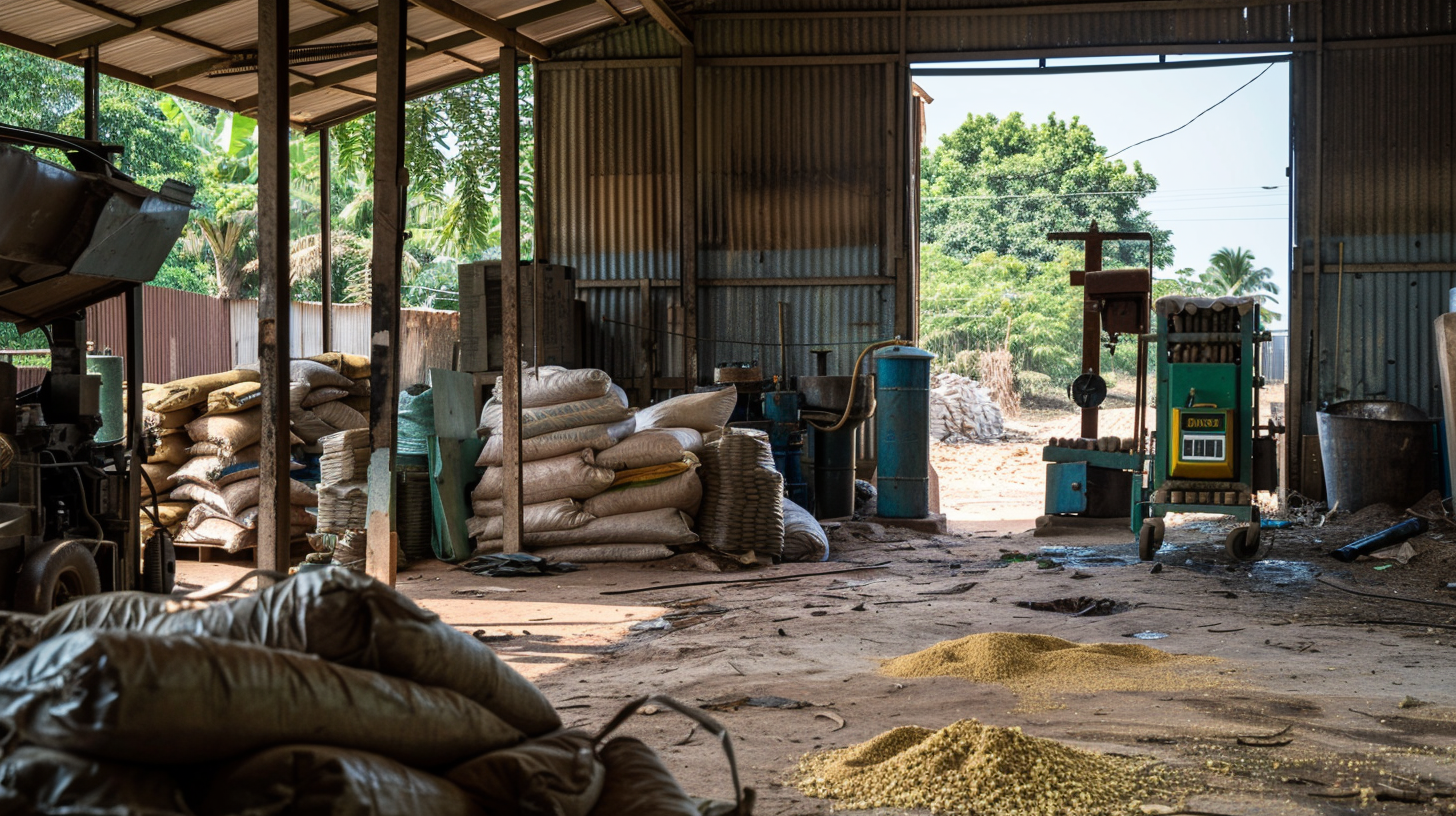
Moringa leaves require controlled drying to preserve nutritional content. This is energy-intensive. Sun drying—the current default in most production zones—results in quality degradation and mold risk. Milling to powder requires hammer mills, which require reliable power.
This is where corridor energy investments become relevant. Solar mini-grids and battery systems designed for mining operations could power agricultural processing facilities in adjacent zones. The 222 MWp solar facility at Kamoa-Kakula, the $340 million Moyi Power project targeting three isolated cities, the $500 million Mwinda Fund for solar home systems and mini-grids—these are not agricultural investments, but they create energy access that agricultural processors can leverage.
Baobab
The global baobab market is estimated at $3-9 billion depending on product scope (powder, oil, ingredients), growing at 6-11% annually. Europe alone represents 30-35% of demand. Baobab is wild-harvested, not farmed—making it a low-capex opportunity for aggregators who can solve processing.
The baobab value chain looks like this: wild harvest → pulp extraction → drying → milling to powder → export. Processing generates 40%+ waste in shells and seeds, which can be converted to biochar or animal feed. The entire chain is energy-constrained.
Baobab aggregation hubs near logistics nodes—points where corridor road networks intersect with production zones—can access both feedstock and transport. The €381.5 million road upgrade along the Angolan segment of the Lobito Corridor improves exactly this kind of connectivity.
The Numbers That Matter
For context on why these supply chains matter:
Global superfood demand is not speculative. The three product categories we track most closely—honey ($9-11B market), moringa ($6-9B market), and baobab ($3-9B market)—together represent $18-29 billion in annual global demand, growing at 5-11% annually. Europe, the largest market for African superfoods, explicitly prioritizes ethical sourcing and traceability—creating premium opportunities for operators who can document provenance.
Energy investment in DRC is accelerating. The $100 million Renewvia solar hybrid project. The $340 million Moyi Power metro-grids. The $500 million Mwinda Fund. The 1,000 MW Green Giant project under development. The 222 MWp CrossBoundary facility at Kamoa-Kakula. These are not pilot projects. They represent hundreds of millions in committed capital flowing into DRC energy infrastructure, primarily to serve mining but with spillover potential for agriculture.
The corridor investment is not theoretical. $6 billion committed. $535 million financing package finalized in December 2025. Engineering, procurement, and construction tender issued in October 2025. This is real capital, on real timelines, building real infrastructure.
What Lubembo Is Doing
Lubembo is actively mapping aggregation and processing opportunities where superfood supply chains intersect viable corridors. We are not waiting for infrastructure to be built. We are positioning on logistics nodes that already function—or will function within 18-24 months.
Our approach:
- Identify production zones where quality feedstock exists at aggregable volumes
- Map processing constraints specific to each commodity (energy, equipment, cold chain)
- Assess corridor proximity to existing or committed infrastructure investments
- Build aggregation relationships with cooperatives and producer groups before scale
This is execution-first strategy. We are not writing policy papers or waiting for government programs. We are building supply chains that work today and will work better as corridor infrastructure comes online.
Why Superfoods Are Positioned to Win
Superfoods are uniquely suited to corridor-adjacent scaling for reasons that distinguish them from staple crops:
- Low volume, high value. A container of baobab powder is worth more per kilogram than a container of maize. This means logistics costs represent a smaller percentage of total value, making longer transport routes economically viable. It also means profitability can be achieved at lower volumes.
- Wild harvest and smallholder production. Superfoods do not require large-scale land consolidation. Baobab is wild-harvested. Honey comes from dispersed beekeepers. Moringa grows on smallholder plots. This means aggregation models work—and aggregation can happen at nodes, not across contiguous land.
- Processing is the value-add. Unlike commodities where value accrues at destination, superfood value is created at source through processing. Dried moringa powder. Filtered honey. Milled baobab. This means investments in processing infrastructure directly increase margins for producers and aggregators.
- Export markets exist and are growing. This is not speculative demand. US meaderies are buying African acaçia honey. European cosmetic and food companies are buying baobab. Supplement manufacturers are buying moringa. The buyers exist. The supply chains are the constraint.
The Lesson
The next phase of African agribusiness will not invent new infrastructure. It will reuse what mining already forced into existence.
This is not a prediction. It is a pattern we are already observing. The question is not whether corridor infrastructure will benefit agricultural value chains. The question is which operators will position early enough to capture the arbitrage.
Mining solved four problems: energy, processing, logistics, and scale. In that order. The operators who apply this same logic to superfoods—rather than waiting for agricultural infrastructure that will never come—will define the next decade of African export agriculture.
The corridors are being built. The energy is being deployed. The only question is whether you are positioned to use them.
Lubembo Intelligence provides market research and operational intelligence on African agricultural supply chains. For deeper analysis on specific corridors, commodities, or operational questions, contact us at hi@lubembo.co
Coming in paid reports: The Superfood Corridor Map—a detailed analysis of where processing and aggregation make economic sense across DRC's emerging infrastructure landscape.
Subscribe to Lubembo Intel for ground-level intelligence on African agricultural markets. Free posts deliver real observations. Paid reports deliver the operational playbooks.


