

Why the smartest Africa operators are splitting production from transaction — and what it means for deal flow.
The Chocolate Maker Who Doesn't Grow Cocoa
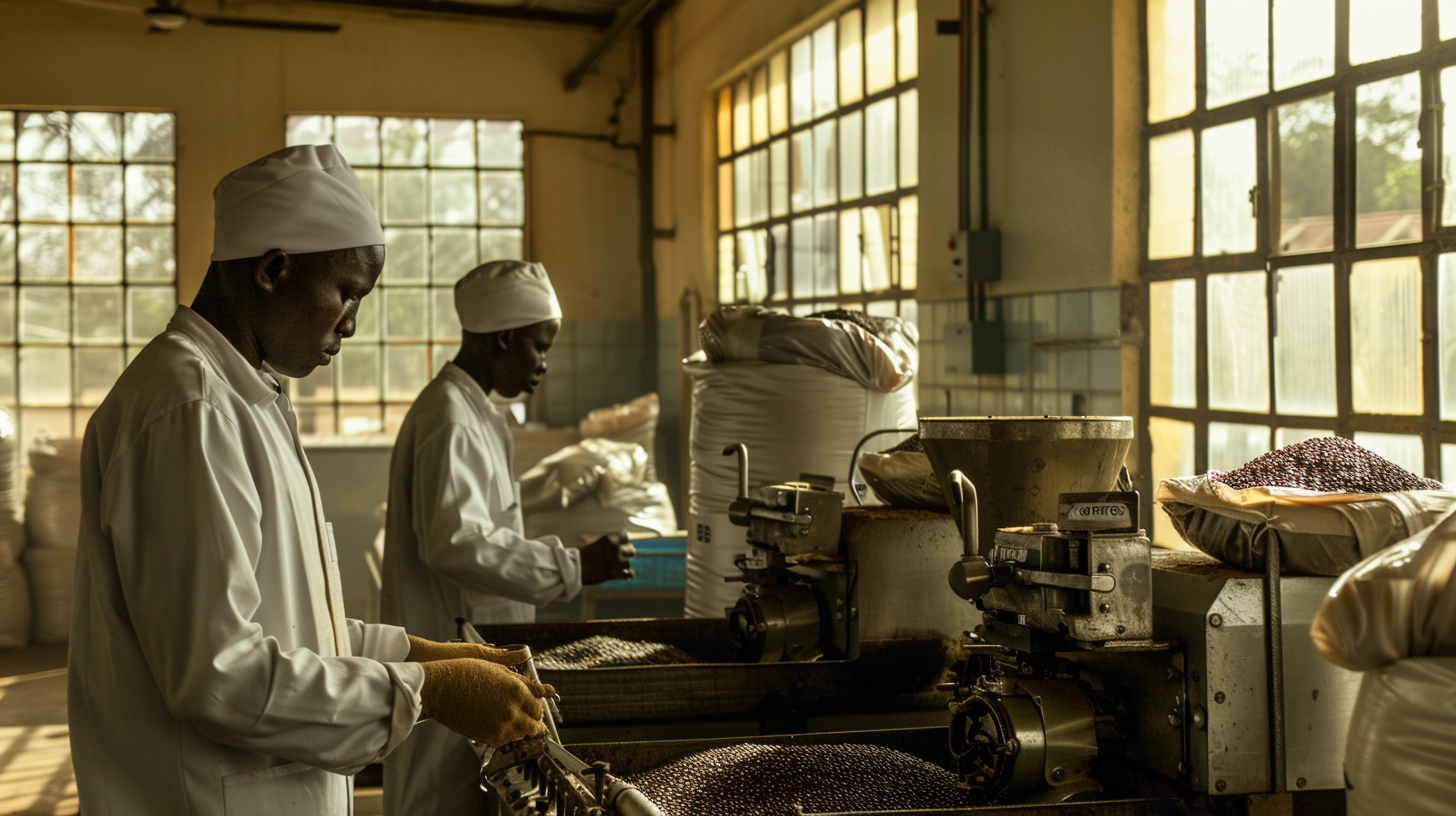
There's a woman building a chocolate factory in Nairobi.
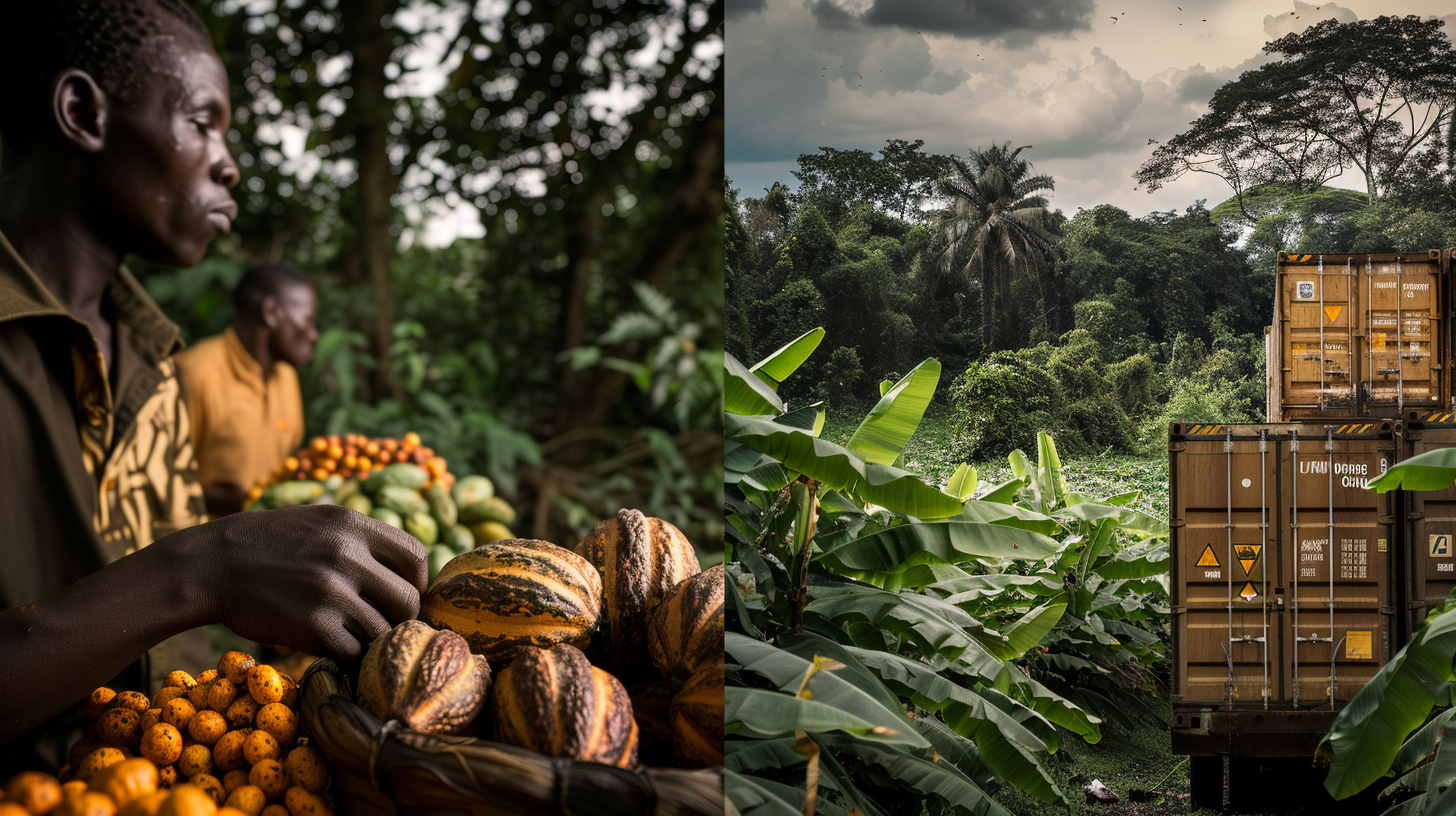
Her cocoa comes from Kivu — the eastern edge of the DRC, boarding Rwanda. It crosses through Goma, aggregates cocoa through Benin, moves into Kenya, and ends up at her factory near Jomo Kenyatta Airport.
From there, she white-labels chocolate bars for three American companies.
She doesn't grow cocoa. She doesn't own farms. She doesn't deal with the complexity of Congolese land tenure, unpredictable roads, or cash-based supply chains.
What she owns is the transformation. The processing. The export interface.
And that, increasingly, is Kenya's play.

The Misconception That Costs Deals
There's a common assumption in African agribusiness: that the countries with the most productive land are the ones capturing the most value.
It sounds logical. Grow more, earn more.
But that's not how trade actually works.
Value in agricultural commodities doesn't sit at the farm gate. It sits in aggregation, processing, standardization, banking, and export logistics. The country that controls those functions controls the margin — regardless of where the raw material originates.
Kenya figured this out years ago.
What Kenya Actually Offers
When international buyers — whether impact funds, food importers, or multinational procurement teams — want exposure to Central or East Africa, they almost always route through Kenya.
Not because Kenya produces the most. But because Kenya makes transactions possible.
Here's the infrastructure that matters:
Banking access. Kenyan banks can receive direct transfers from US and Canadian accounts with minimal friction. At Lubembo, we do it monthly — personal and business. Try that with a Congolese bank. You're routing through three SWIFT intermediaries, paying exorbitant fees, and waiting days for confirmation.
Mobile money infrastructure. M-Pesa in Kenya (Safaricom) is a functioning financial rails system. Fees are reasonable. Adoption is universal. In DRC, M-Pesa (Vodacom) exists — but fees are higher, coverage is thinner, and most transactions still happen in cash.
Funding flows. Impact investors, venture capital, DFIs — they all prioritize Kenya. Even when the underlying opportunity is in DRC or Uganda, the capital routes through Nairobi. It's where the lawyers are. It's where the compliance is understood. It's where term sheets get signed.
Equipment and services. Need a tractor? A solar dryer? Processing equipment? In Kenya, these are commoditized — available, competitively priced, and supported. In DRC, you're importing everything, paying premiums, and hoping customs doesn't delay you by three weeks.
Kenya didn't become East Africa's hub by growing more. It became the hub by making business easier.
The Dubai Parallel
Here's the analogy we keep coming back to: Kenya is becoming Africa's Dubai.
Dubai doesn't produce oil. It doesn't manufacture at scale. It doesn't grow food.
But Dubai is where you hold your bank account. Where you structure your deals. Where you register your holding company. Where you move money in and out of the Gulf — and increasingly, the world.
That's the Kenya play.
You don't buy land in Kenya to farm at scale. Land is expensive, availability is limited, and you're competing with a mature market. But you set up your trading company in Kenya. You run your treasury through Nairobi. You process and package in a facility near the airport. And you export with documentation that international buyers actually trust.
The late movers to Dubai learned this lesson: it's the transaction layer, not the production layer.
Kenya is teaching Africa the same lesson now.
Where Production Actually Lives
So if Kenya is the trading desk, where's the farm?
It's next door.
DRC is two to three times the size of Kenya. Most of its arable land is unused. The Congo Basin alone — Kisangani, Équateur, Orientale — holds more biodiversity and forest honey potential than anywhere else on the continent.
For superfoods specifically:
- Honey: The Congo Basin is effectively untapped. Cooperatives we work with in Kongo-Central produce 16-18 tonnes annually with minimal infrastructure. Scale that across Équateur and Orientale, and you're looking at serious volume.
- Moringa: Ten hectares in DRC can produce six tonnes of moringa powder. Kenya doesn't have the land to match that.
- Baobab: The trees are there — entire groves in Kongo-Central that no one is commercially harvesting.
Uganda, Tanzania, Rwanda — similar story. Raw material is abundant. But the transformation infrastructure isn't.
Tanzania in particular has land and potential, but the business environment is heavier. Regulatory friction, banking limitations, and inconsistent policy make it harder to operate at speed.
Kenya sits in the middle of all of this — geographically and structurally — and captures the margin.
The Value Chain Math
Let me put numbers to this.
| Stage | Value Capture |
|---|---|
| Raw cocoa at farm gate (Kivu) | $2-3/kg |
| Processed chocolate bars (Nairobi) | $15-25/kg retail |
| Margin captured by transformation | $12-22/kg |
The farmer got $2. Kenya got the transformation and logistics margin.
This isn't exploitation — it's infrastructure reality. Kenya invested in processing facilities, airport logistics, export documentation systems, and banking rails. DRC didn't. The margin flows to whoever built the bridge.
The same dynamic plays out in honey, moringa, hibiscus, and increasingly, ginger. Raw material moves from production zones — often in DRC, Uganda, or Tanzania — to Kenya, where it gets processed, packaged, and exported.
Kenya doesn't need to grow it. Kenya just needs to be the last stop before the container ships.

What This Means for Deal Structures
If you're entering African agribusiness — whether as an investor, importer, or operator — the Kenya-as-trading-desk model has direct implications for how you structure transactions.
For investors: Don't conflate production potential with business viability. DRC has the land and the raw materials. But your holding company, your banking, and your exit structure probably belong in Kenya. We see this repeatedly: funds that try to domicile in DRC spend 18 months on compliance before deploying a single dollar. Funds that structure through Kenya close in 90 days.
For importers: Your supplier might source from DRC or Uganda, but your contract, your payment terms, and your documentation should route through a Kenyan entity. It de-risks the transaction and simplifies compliance. When AGOA verification happens at Baltimore, Kenyan export documentation clears faster than Congolese.
For operators: Consider splitting your structure. Production in DRC (or wherever the raw material lives). Transformation and export in Kenya. This isn't a workaround — it's how the most sophisticated players in the region are building.
At Lubembo, this is exactly how we're structured. Groupe Martin SARL handles production in DRC. Lubembo Trades — our Kenya entity — handles the trading desk. We source from Congo Basin cooperatives and process for export through Nairobi.
It's not the only model. But it's the one that matches how trade actually flows.
The Competitive Landscape
Kenya's dominance isn't guaranteed forever.
| Country | Positioning | Timeline |
|---|---|---|
| Rwanda | Building aggressively; special economic zones; visa-free access | 3-5 years to compete |
| Ethiopia | Scale and ambition; but forex constraints and political risk | Uncertain |
| Tanzania | Could unlock overnight with right policy shifts | Policy-dependent |
| Kenya | Current default; established rails; trusted by buyers | Now |
But for now, Kenya remains the default — the place where African commodities become tradeable.
The question for the next decade isn't "who can grow more."
It's "who can process, standardize, and export faster."
Kenya understood that early. Everyone else is still catching up.
The Lubembo Intel Lens
At Lubembo Intel, we track how trade actually structures across the region — not how development reports say it should work.
This article is free because understanding the Kenya-DRC production-transaction split is foundational to operating in Central and East Africa. If you're still trying to do everything in one country, you're leaving margin on the table and adding risk to every deal.
For deeper analysis — entity structuring by jurisdiction, banking pathway comparisons, corridor-specific cost models, and live deal flow data on which commodities are moving through which routes — our paid subscribers access that intelligence.
What Tier 2 members ($299/month) receive:
- Monthly corridor reports: which commodities, which routes, what's moving
- Entity structuring templates for Kenya-DRC split operations
- Banking pathway analysis with fee comparisons
- Direct access to quarterly briefings
What Tier 3 members ($3,000/month) receive:
- Everything in Tier 2
- Custom deal memo support for specific transactions
- Direct introductions to verified suppliers and buyers in our network
- Priority access to Lubembo Trades deal flow
The chocolate maker in Nairobi didn't stumble into her model by accident. She understood where value accrues. The question is whether you do too.
Lubembo Intelligence is an operator-led market intelligence platform for African agribusiness and trade. We don't model from laptops in London. We publish what we learn from executing — because the gap between "how Africa should work" and "how it actually works" is where deals die or close.


