

Real cost breakdown: $32,193 to ship 7,650kg of superfoods from Kenya to Baltimore. Full receipts, hidden fees, and the $4,500 tariff detention nobody warned us about.
Executive Takeaway
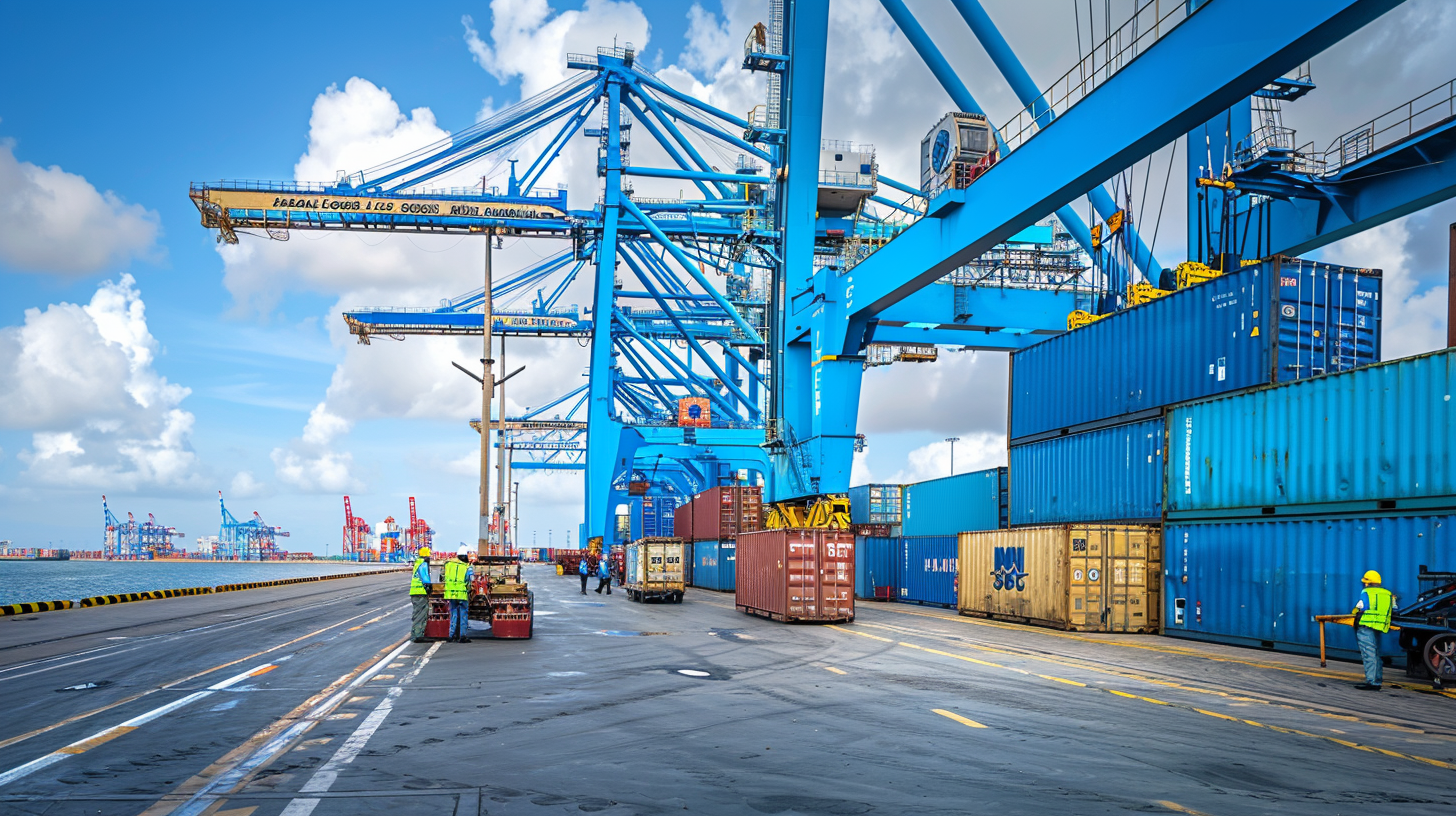
A 40ft container of mixed superfoods—moringa, hibiscus, baobab, seamoss—shipped from Mombasa to Baltimore cost $32,193 all-in. That's $4.21 per kilogram before any margin.
This isn't a model. It's an actual shipment from late 2025, documented by a Kenyan exporter who agreed to share anonymized cost data with Lubembo Intelligence. Every line item is real. Every "facilitation fee" is real. The $4,500 detention charge from the AGOA tariff deadlock? Very real.
The practical implications:
- Product procurement was 30% of total cost ($9,747). Hibiscus alone was $3,141 for 1,340kg. Seamoss was $2,231 for 3,360kg. These aren't farm-gate prices—they include aggregation from multiple collection points because Kenya's superfood supply chain is fragmented.
- Origin operations added another 23% ($7,405). This covers transport across multiple counties, KEPHIS certification, public health permits, customs clearance in Mombasa, drying labor, and drying shed construction. Also: $437 in "inspector facilitation"—the line item nobody puts in their business plan.
- Shipping and destination charges were 47% ($15,041). Ocean freight was only $4,104. The rest? Customs brokers, Baltimore examination fees, port hauling, and $4,500 in detention because the container got caught in the AGOA expiration and tariff inspection backlog.
- Post-harvest losses added unbudgeted pain. The exporter lost $1,500 worth of baobab leaves before shipment—100% spoilage from improper storage at a cooperative. That loss isn't in the $32,193 total. It's on top of it.
This post breaks down the full cost structure, the stories behind the numbers, and what this means for anyone trying to build a sustainable export business from Kenya.
At-a-Glance Numbers
| Metric | Value |
|---|---|
| Container size | 40ft FCL |
| Total weight shipped | 7,650 kg |
| Route | Mombasa → Baltimore |
| Carrier | Hapag Lloyd |
| Total cost (all-in) | $32,193 |
| Cost per kg | $4.21 |
| Product procurement | $9,747 (30%) |
| Origin operations | $7,405 (23%) |
| Shipping & destination | $15,041 (47%) |
| Transit time (expected) | ~6 weeks |
| Transit time (actual) | ~10 weeks |
| Detention charges | $4,500 |
| Post-harvest loss (pre-shipment) | $1,500 |
FX rate used: 1 USD = 128 KES
The Full Cost Breakdown
Product Procurement: $9,747
| Product | Weight (kg) | Cost (KES) | Cost (USD) | $/kg |
|---|---|---|---|---|
| Seamoss | 3,360 | 285,600 | $2,231 | $0.66 |
| Hibiscus Flower | 1,340 | 402,000 | $3,141 | $2.34 |
| Baobab Seeds | 1,150 | 73,500 | $574 | $0.50 |
| Moringa Seeds | 600 | 240,000 | $1,875 | $3.13 |
| Moringa Leaves | 420 | 168,000 | $1,313 | $3.13 |
| Soursop Leaves | 490 | 7,200 | $56 | $0.11 |
| Guava Leaves | 100 | 18,000 | $141 | $1.41 |
| Mango Leaves | 100 | 4,200 | $33 | $0.33 |
| Mukomba Roots | 90 | 49,200 | $384 | $4.27 |
| Total | 7,650 | 1,247,700 | $9,747 | $1.27 avg |
What this reveals:
The price variance across products is significant. Seamoss at $0.66/kg vs moringa leaves at $3.13/kg reflects both supply dynamics and processing complexity. Hibiscus at $2.34/kg is notable—this is dried flower, already processed, which commands a premium.
These aren't farm-gate prices. Kenya's superfood supply chain is fragmented. The exporter had to establish collection points in multiple regions (Machakos, Kwale, Makueni) because no centralized aggregation exists. When they initially tried village-level collection centers, they received "just a handful of leaves" over two months. They pivoted to working with lead buyers who aggregated from farmers and delivered consolidated volumes.
That aggregation layer adds cost—but it's the only way to reach exportable quantities.
Origin Operations: $7,405
| Category | Cost (KES) | Cost (USD) | Notes |
|---|---|---|---|
| Transport (multi-county pickup) | 232,000 | $1,813 | Pickup from Machakos, Kwale, Munyu, Kambu |
| Drying shed construction & leasing | 210,000 | $1,641 | Infrastructure investment |
| Customs clearance (Mombasa) | 120,000 | $938 | Samuel B's park |
| Public Health Permit | 100,000 | $781 | Required for food export |
| Drying labor | 60,000 | $469 | Temp workers for soursop, baobab |
| KEPHIS certification (Ecitizen) | 55,750 | $436 | Kenya Plant Health Inspectorate |
| Storage charges | 50,000 | $391 | Pre-shipment warehousing |
| Inspector facilitation | 50,000 | $391 | See below |
| Packing (Machakos & Kwale) | 20,000 | $156 | Final packaging |
| Business Permit | 17,500 | $137 | Annual requirement |
| Phytosanitary certificate | 15,000 | $117 | Bakali export |
| Permits (Waste, Fire, SBP) | 10,950 | $86 | Multiple small permits |
| Inspector facilitation (additional) | 6,000 | $47 | See below |
| Food & Drug Certificate | 600 | $5 | Medical clearance |
| Total | 947,800 | $7,405 |
The documentation nightmare:
The exporter described Kenya's export documentation process as "quite frustrating and opaque." A single shipment requires: phytosanitary certificate, county certificate, agricultural authority clearance, business permit, CR12 (annual director certification), KRA tax compliance, and—for seamoss—marine authority permits.
Most critically: the export license expired mid-shipment.
The container was loaded and sealed in early June. Then they discovered their export license was expiring. Kenya doesn't do renewals—you restart from zero. New permits, new inspections, new packhouse licensing. This delay alone added a month.
In the exporter's words: "Licensing a packhouse is a whole nightmare."
The "facilitation" line items:
Two entries totaling $437: "Inspector facilitation" ($391) and "Inspection facilitation" ($47).
Let's be direct about what this means. The exporter's message to us included this line: "For Africa there should be a new expense called bribes and corruption!!"
These are the costs that don't appear in any official fee schedule. They're the informal payments that make inspections happen on time, that prevent arbitrary delays, that grease a system designed to extract rent at every checkpoint.
$437 on a $32,000 shipment is 1.4%. Manageable. But it's also a tax on formality—a cost that rewards those who know how to navigate the system and punishes those who don't.
The CESS charges:
One cost that surprised the exporter: county-level CESS taxes for moving produce across Kenya. Transporting moringa from Makueni to Mombasa triggered two checkpoint stops, each demanding payment. This is on top of official transport costs.
Kenya's devolved county system means each jurisdiction can tax agricultural movement. For exporters consolidating from multiple regions, this adds up.
Shipping & Destination: $15,041
| Category | Cost (USD) | Notes |
|---|---|---|
| Ocean freight (Hapag Lloyd) | $4,104 | Mombasa → Baltimore, 40ft FCL |
| Detention | $4,500 | 3 weeks held at Baltimore |
| Baltimore examination | $2,607 | Customs inspection fees |
| Port to warehouse hauling | $1,200 | Final mile delivery |
| Customs brokers | $1,066 | US-side clearance |
| Other origin charges | $782 | Mombasa port fees |
| Destination charges | $782 | Baltimore terminal |
| Total | $15,041 |
The AGOA disaster:
Ocean freight itself was reasonable: $4,104 for a 40ft container from Mombasa to Baltimore. That's roughly $0.54/kg—competitive for the route.
Everything else was chaos.
The container arrived in Baltimore during the AGOA (African Growth and Opportunity Act) expiration and tariff policy deadlock of late 2025. US Customs held the container for three weeks of inspections. The result:
- $4,500 in detention charges (container sitting at port)
- $2,607 in examination fees (customs inspection costs)
- Plus demurrage and additional clearance fees
Detention alone was more than the ocean freight. This single policy event added 30% to the total shipping cost.
The exporter had no control over this. AGOA's status was a matter of US trade policy. But the cost landed entirely on their P&L.
Transit time reality:
The carrier quoted approximately 6 weeks transit. Actual time from warehouse to delivery: 10+ weeks. The additional 4 weeks came from:
- 1 month delay for export license renewal
- 3 weeks detention in Baltimore
- Unexplained 2-week extension by carrier mid-transit
For perishable-adjacent products like dried herbs, this timeline creates quality risk. The exporter noted the carrier extended transit "without any explanation."
The Stories Behind the Numbers
Story 1: The $1,500 Baobab Disaster
Before this container shipped, the exporter lost $1,500 worth of baobab leaves. Total loss. 100% spoiled.
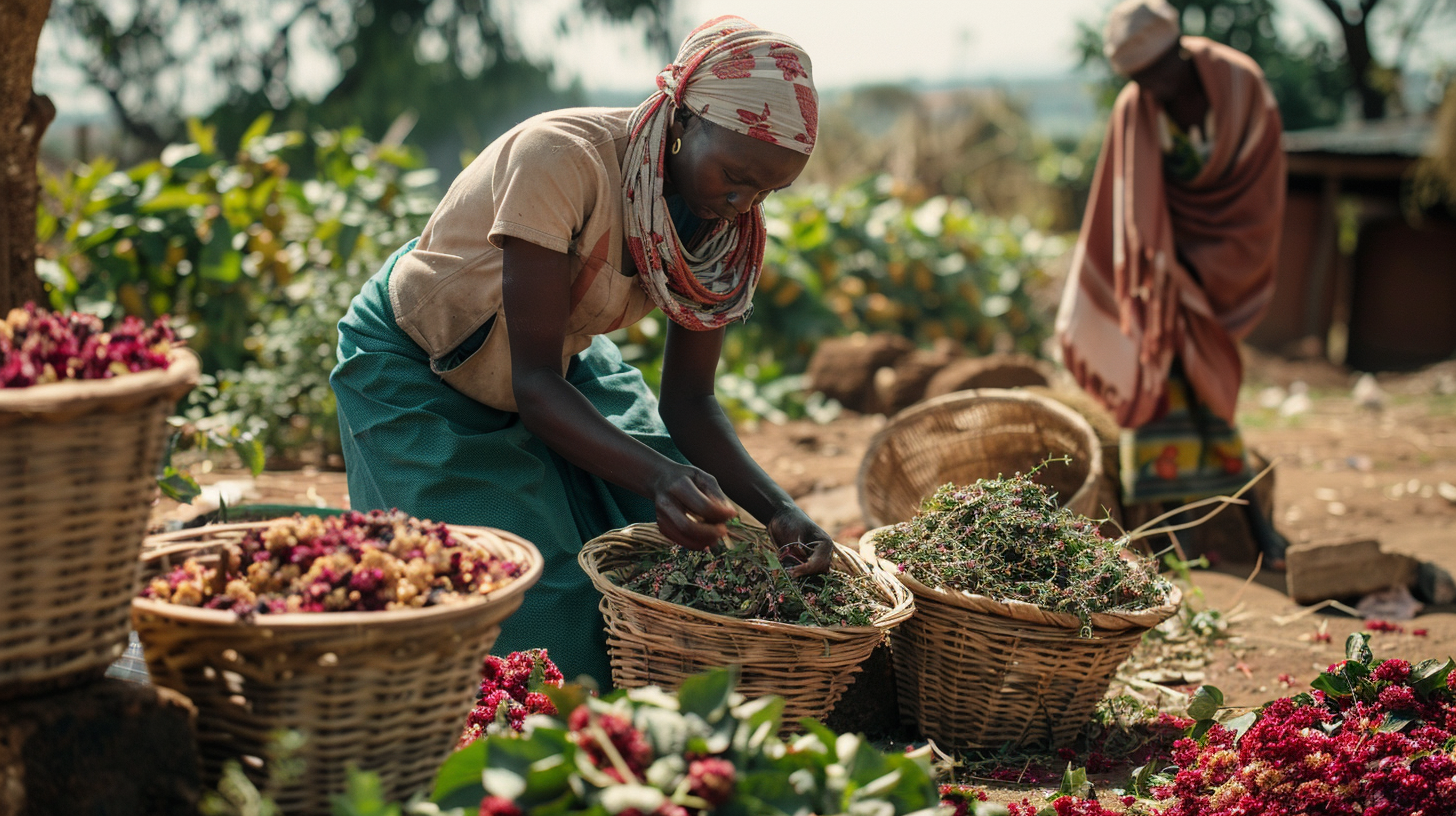
What happened: They contracted with a cooperative to collect baobab leaves from farmers. The cooperative piled the fresh leaves without aeration or turning. In Kenya's climate, this is a death sentence for plant material. The entire batch composted before it could be dried.
In the exporter's words: "They all became manure."
This loss isn't in the $32,193 container cost. It's additional. It's the cost of learning that Kenya's superfood sector has no established post-harvest protocols. No grading system. No technical support from government or NGOs.
The exporter had to build drying infrastructure themselves ($1,641 for shed construction), hire temporary labor for proper drying ($469), and establish quality control at every collection point.
Kenya's agricultural extension services focus on coffee and tea—the traditional export crops. Superfoods are orphaned.
Story 2: The Licensing Cliff
Imagine: your container is loaded, sealed, ready to ship. Then you discover your export license expires in days.
This happened. The license was issued in January, used for a February shipment, and expired in June. No warning. No renewal option. Full restart required.
Kenya doesn't grandfather existing licenses. You begin again: new permits, new inspections, new packhouse certification. One month delay minimum.
The exporter's advice: "We were shocked that it expired in June and we had to start the lengthy process all over again."
For anyone planning Kenya exports: build license renewal into your timeline. Assume the worst-case bureaucratic scenario. Budget for it.
Story 3: The Aggregation Pivot
The original plan was elegant: establish village collection centers, buy directly from farmers, cut out middlemen.
Reality: "Within the first 2 months we had received just a handful of leaves."
Kenya's smallholder farmers aren't organized for superfood collection. There's no existing infrastructure. No farmer groups aggregating moringa or baobab at scale. The exporter had to abandon the direct model and work with "lead buyers"—local traders who aggregate from farmers and deliver consolidated volumes.
This adds a margin layer. But it's the only way to reach exportable quantities without spending years building farmer networks from scratch.
What We Learned
1. Destination charges can exceed origin charges.
Shipping was $4,104. Detention, examination, and destination handling added $10,937. The US side of this shipment cost more than getting it out of Kenya.
2. Policy risk is real and uninsurable.
AGOA expiration wasn't in anyone's risk model. $4,500 in detention charges materialized from a trade policy dispute between governments. Exporters absorbed 100% of the cost.
3. Documentation is the bottleneck, not logistics.
The exporter named documentation as their "greatest bottleneck"—not port congestion, not carrier reliability, not inland transport. The opacity and redundancy of Kenya's export paperwork creates more friction than physical infrastructure.
4. Post-harvest infrastructure doesn't exist for superfoods.
Kenya has world-class tea and coffee processing. For moringa, baobab, hibiscus? Nothing. Exporters build their own drying sheds, train their own workers, develop their own protocols if there is one monitered? The $1,641 spent on drying infrastructure was a necessity, not a luxury.
5. "Facilitation" is a real line item.
$437 in informal payments on this shipment. Budget for it. Pretending it doesn't exist doesn't make it go away—it just means you're surprised when inspectors move slowly.
6. The math is tight.
$32,193 for 7,650 kg = $4.21/kg all-in cost.
If you're selling seamoss at $6/kg wholesale, your margin is $1.79/kg before overhead, before losses, before the next AGOA-style surprise. The exporter called this "more of a learning exercise than a sustainable business."
That's honest. That's the reality of early-stage African exports.
Kenya vs DRC: What's Coming Next
This Kenya data is the first contribution to Lubembo Intelligence's cross-country export cost database. We're now compiling comparable data from DRC (our home market) to answer:
- How do origin costs compare? Kenya's $7,405 vs DRC's equivalent
- Which documentation regime is more burdensome?
- Where are "facilitation fees" higher?
- Which route offers better carrier reliability?
- What's the post-harvest loss rate by country and product?
If you're an exporter from Kenya, DRC, Ghana, Senegal, or anywhere else shipping African superfoods, we want your data. Anonymized. No buyer names. Just the real numbers.
Why contribute?
Every exporter operating in isolation repeats the same expensive lessons. Aggregated data creates benchmarks. Benchmarks create negotiating power. Negotiating power creates sustainable businesses.
The exporter who shared this Kenya data told us: "You have no idea how Lubembo Intel will be helping us to realistically determine our cost of sales."
That's the goal.
Contribute Your Data
We're building the first open-source cost database for African superfood exports. If you've shipped a container in the last 24 months, we want to hear from you.
What we need:
- Country of origin
- Products shipped
- Container size and route
- Cost breakdown (ranges are fine)
- Timeline and delays
- What surprised you
What you get:
- Early access to cross-country analysis
- Benchmarking against other exporters
- A voice in shaping industry-wide pricing intelligence
Your data stays anonymous unless you choose otherwise.
Email: hi@lubembo.co Subject: "Export Cost Contribution"
Templates
1. Kenya Export Cost Tracker Spreadsheet template based on Anne's actual cost categories. Covers procurement, origin operations, shipping, and destination charges.
2. Documentation Checklist (Kenya) Every permit, certificate, and clearance required for food/herb exports from Kenya. Based on real shipment experience.
3. Post-Harvest Loss Log Track spoilage by product, stage, and cause. Essential for identifying where your supply chain breaks.
Templates available to Lubembo Intel Tier 2,3 subscribers
Next: The Paid Deep Dive
This free post covered the Kenya cost structure and the stories behind the numbers.
The paid post (coming) goes deeper:
- Kenya vs DRC: Full cross-country cost comparison. Origin costs, documentation burden, facilitation fees, carrier reliability, post-harvest infrastructure—side by side.
- The AGOA impact analysis. What the 2025 tariff situation means for African exporters targeting the US. Which products are affected. What alternatives exist.
- Margin modeling by product. At $4.21/kg all-in, which products can sustain a profitable export business? We run the numbers on moringa, hibiscus, baobab, and seamoss.
Paid subscribers get the models, the country comparisons, and early access to contributed data.
This post was made possible by a Kenyan exporter who agreed to share detailed cost data with Lubembo Intelligence. Her willingness to document the real numbers—including the uncomfortable ones—is exactly what this industry needs. Thank you, Anne.
If this breakdown was useful, subscribe to Lubembo Intel. Free posts deliver real numbers. Paid posts deliver the playbooks.


