

A Forest Honey Case Study
The Trade That Should Have Worked
In January 2026, a California-based meadery placed an order for approximately 5 tonnes per quarter of acacia forest honey from East and Central Africa.
The price point: $5/lb — already at the upper end of global honey pricing, where U.S. buyers typically source bulk honey from Brazil at $2/lb.
The buyer was willing. The demand was real. The contracts were credible. The premium was generous.
The order could not be fulfilled.
Not because of logistics. Not because of tariffs. Not because of buyer hesitation.
Because production-ready supply at that scale does not exist.
This article explains why — and why the structural reasons matter far beyond honey.
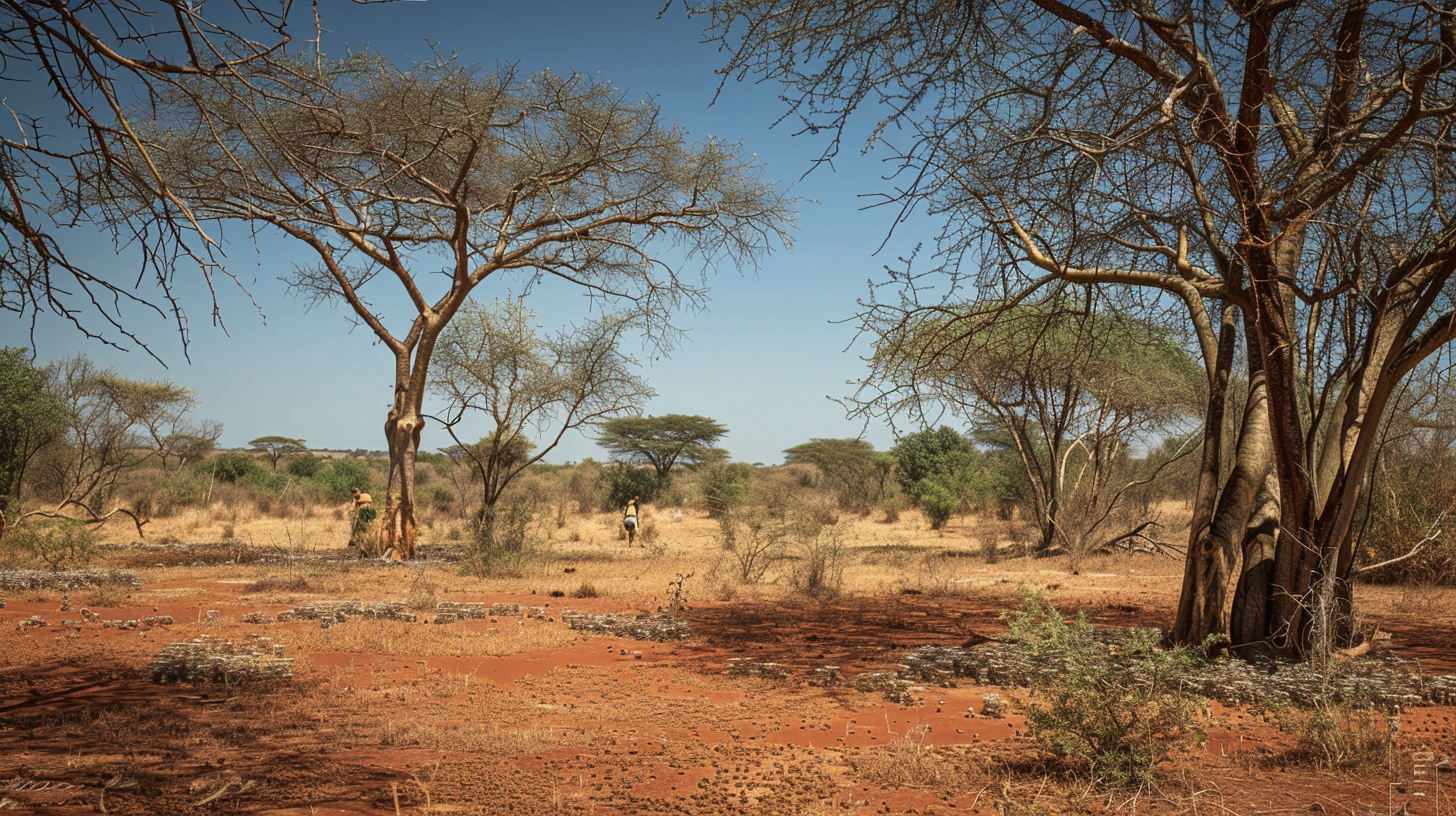
Kenya: Climate-Documented, Production-Fragile
Kenya is the default sourcing assumption for East African honey. It has export infrastructure, established cooperatives, documented beekeeping programs, and a history of NGO investment in apiculture.
In 2025, none of that mattered.
What Happened
Severe drought across Kenya's acacia belt caused an estimated 30–40% decline in honey production. Flowering cycles shortened. Nectar flows collapsed. Colonies weakened or absconded.
Our network of Kenyan suppliers — cooperatives we had worked with previously — reported they could not meet volume. One of Lubembo Aggregrator partner supplier could offer approximately 500 kg. Not tonnes. Kilograms.
The Pricing Distortion
The producers in Kitui, a region known for acacia honey, who did have stock quoted $5/lb.
This is the same price the American buyer was offering as a premium.
At that price, there is no margin for aggregation, no buffer for quality sorting, no room for logistics. The trade becomes structurally unviable.
Why $5/lb from a Kenyan cooperative?
Because NGO-funded programs had historically purchased honey at subsidized or "fair trade" prices that did not reflect global commodity benchmarks. Producers anchored to those prices. When commercial buyers appeared, offering what they considered a premium, producers saw it as baseline.
Climate shock + NGO price anchoring = non-competitive supply.
No buffer stock. No aggregation infrastructure. No risk-sharing mechanism. Kenya's honey sector, despite decades of development investment, had no resilience against a single bad season.
DRC: Climate-Resilient, Production-Fragile
The Democratic Republic of Congo has what Kenya lacks: climate resilience.
The Congo Basin's forest ecology is not dependent on seasonal rains the way East African acacia systems are. Flowering cycles are more distributed. Drought exposure is lower. The theoretical production potential is enormous — millions of hectares of forest, year-round nectar sources, and a beekeeping tradition that predates colonial contact.
In practice, DRC could not fill the order either.
The Production Reality
No single production zone in DRC currently reaches 5 tonnes per year of export-grade honey — let alone 5 tonnes per quarter.
The constraints:
- Fragmented producers. Beekeepers operate in isolation, with no aggregation network connecting them to export channels.
- Inconsistent post-harvest handling. Sun exposure during harvest and lack of cold-room storage causes fermentation. Fermented honey is unsellable at scale in global markets.
- Overstated projections. Production estimates from cooperatives and NGO-backed programs consistently overshoot reality by 5–10x.
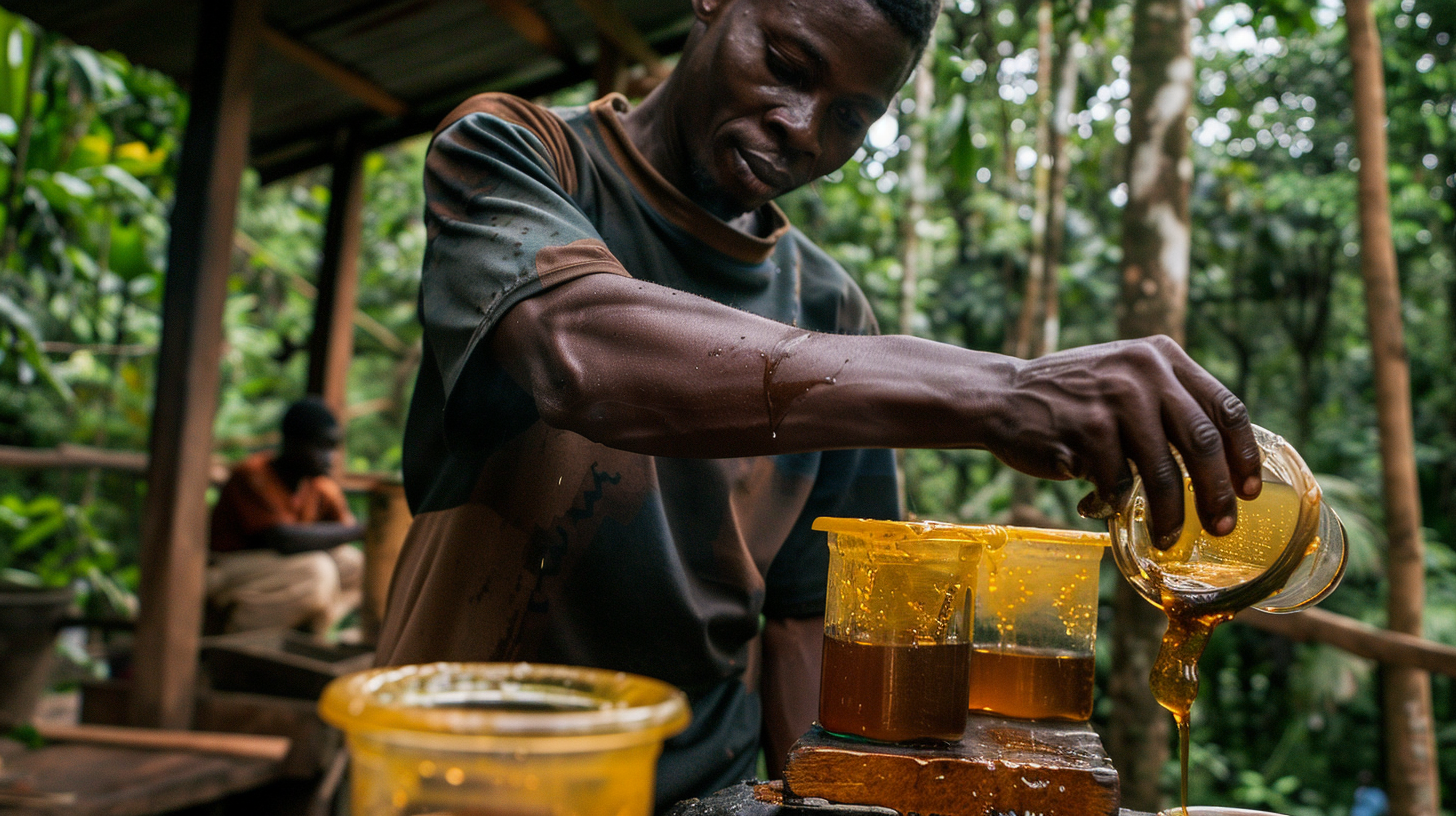
A Training Site, Not a Success Story
Our own Lubembo farm in Bandundu operates as a training site for regional cooperatives, who in turn become our suppliers at fair market price, while we secure foreign buyers and exports. We have 120 hives in our training production site.
When we started three years ago, our senior beekeeping consultants — experienced practitioners trained through NGO programs — projected 10 tonnes per year from 100 hives.
The actual output: approximately 1 tonne.
A 90% miss.
The reasons are structural, not personal: unrealistic yield benchmarks borrowed from Western apiculture, slow colony multiplication, and no investment in the controlled queen-rearing techniques required for commercial scale. (We documented this in detail in a separate Lubembo Intel report on the colony bottleneck.)
The point here is simple: Climate resilience does not equal production readiness.
DRC has the forests. It does not have the systems.
The False Assumption in Climate and Trade Finance
Here is the gap that no one is measuring:
| Factor | Kenya | DRC |
|---|---|---|
| Climate documentation | High | Low |
| Climate fragility | High | Low |
| Export infrastructure | Exists | Minimal |
| Production readiness | Assumed, not verified | Not assumed, not built |
| Ability to fulfill 5T/quarter order | No | No |
Kenya is documented but climate-fragile. DRC is climate-resilient but production-fragile.
No system currently measures this trade-off in real time for specific value chains.
Why?
- Climate funds model resilience — exposure to shocks, vulnerability indices, adaptation potential. They do not model whether a region can actually produce and move goods.
- Trade finance models volume — historical exports, port throughput, tariff structures. It assumes supply exists and asks how to move it.
- Development programs model farmers — training, inputs, cooperative formation. They measure participation, not output.
No one models execution failure.
No one tracks the gap between "climate-adapted" and "trade-ready." No one asks: if a buyer places an order today, can this region fulfill it?
That gap is where trades die.
The Hidden Costs of Informality
Failed trades are not just missed opportunities. They have quantifiable costs that compound over time.
For Producers
Our 8-tonne production shortfall (projection vs. reality) represents:
Lost revenue at $11/kg FOB: ~$88,000
That is capital that did not enter the local economy. It is income that beekeepers did not earn. It is reinvestment that did not happen.
For Buyers
The California meadery's unmet demand:
4 tonnes/quarter × $11/kg = ~$44,000/quarter in unfulfilled orders
Annualized, that is $176,000 in purchasing power that could not find African supply.
The buyer's alternatives: source lower-quality honey from other origins, pay higher prices for limited European supply, or cancel product lines entirely.
For the Sector
Each failed trade reinforces the perception that African origins are unreliable.
Buyers reduce exposure. Importers stop trying. Premium positioning becomes impossible because volume cannot be guaranteed.
Informality does not just break individual contracts. It destroys the trust infrastructure that makes future trades possible.
Why "Digital Trade" Misses the First Mile
The dominant narrative in African agricultural development focuses on last-mile solutions:
- Digital payments
- Traceability platforms
- Marketplace apps
- Logistics dashboards
These tools assume supply exists and ask how to connect it to demand.
You cannot digitize supply that does not exist at scale.
The first-mile problems are:
- Aggregation: Can dispersed smallholders consolidate volume to meet minimum order quantities?
- Storage: Can post-harvest handling preserve quality until export?
- Working capital: Can aggregators pre-finance purchases without donor dependency?
- Risk buffering: Can the system absorb a bad season without collapsing?
- Production systems: Can beekeepers (many non-literate) follow protocols that ensure consistent output?
These are not software problems. They are capital problems, infrastructure problems, and institutional problems.
A traceability app does not help if there is nothing to trace.
Who Pays the Price
The costs of the supply gap are distributed across the value chain, but not equally.
Farmers lose income. The beekeepers in Kitui who could not sell at competitive prices. The cooperatives in Bandundu who projected 10 tonnes and delivered 1. They absorb the gap between expectation and reality.
Buyers lose confidence. The meadery that wanted African acacia honey will likely source elsewhere next quarter. Once a buyer establishes an alternative supply chain, returning to African origins requires re-proving reliability from zero.
Climate funds misallocate capital. Investments flow to "climate-resilient" regions without verifying whether those regions can convert resilience into production. The DRC receives climate adaptation funding. It does not receive aggregation infrastructure funding. The result: resilient forests, no exports.
Africa remains labeled "unreliable." Each failed trade reinforces a narrative that justifies sourcing from elsewhere. The label sticks not because it is accurate, but because no one is measuring what would make it inaccurate.
This is not anecdotal. It is systemic.
What Needs to Change
Three shifts — not solutions, but redirections:
1. Measure Production Readiness, Not Just Climate Exposure
Climate vulnerability indices are necessary but insufficient. A region can be climate-resilient and production-fragile simultaneously. Funders and investors need metrics that answer: Can this region fulfill a commercial order today?
That means tracking:
- Aggregation capacity (tonnes/month)
- Storage infrastructure (cold chain, humidity control)
- Quality rejection rates
- Contract fulfillment history
2. Fund Aggregation and Storage, Not Just Inputs
The default development model funds farmer training, inputs, and cooperative formation. These are upstream interventions.
The binding constraint is often midstream: the infrastructure that converts dispersed production into tradable volume.
Cold rooms. Warehouses. Working capital facilities. Quality testing labs. These are less photogenic than farmer field schools. They are more important for trade.
3. Treat Failed Trades as Data, Not Embarrassment
Every unfulfilled order contains intelligence: which regions could not supply, at what price, with what quality constraints, and why.
Currently, this data is buried. Buyers do not publish it. Producers do not report it. Development programs do not track it.
Failed trades should be the primary data source for understanding supply gaps.
If we treated contract failures with the same rigor we treat successful exports, we would have a real-time map of where African agriculture actually is — not where we hope it is.
Why This Matters Beyond Honey
Honey is simply the clearest diagnostic case.
The same dynamics apply to:
- Hibiscus: Sudanese and Nigerian supply volatile; Senegalese production inconsistent; buyers default to Egypt and Mexico
- Shea: West African cooperatives over-promise; industrial buyers under-contract; quality variance breaks deals
- Cocoa: Traceability investments outpace production stability; climate shocks in Côte d'Ivoire ripple globally
- Coffee: Ethiopian specialty premiums attract attention; fulfillment rates remain unpredictable
- Moringa: Demand surges; African supply fragments; Indian producers capture market share
In each case, the pattern repeats:
- Climate or demand signal suggests opportunity
- Development or climate capital flows to the region
- Production remains fragmented, informal, under-capitalized
- Commercial orders arrive
- Orders cannot be fulfilled
- Buyers exit
- The region is labeled "not ready"
The supply gap paradox is not about honey. It is about the systematic failure to connect climate resilience, production capacity, and trade readiness into a single, measurable framework.
The Lubembo Intel Lens
At Lubembo Intel, we track these gaps in real time — using live trades, failed contracts, and production bottlenecks as primary data.
This article is free because the problem is systemic. Awareness alone does not solve it, but awareness is the precondition for directing capital, policy, and buyer attention to the right constraints.
For deeper analysis — country-by-country production readiness assessments, supplier capacity databases, quarterly forecasts by value chain, and the unit economics of aggregation in specific corridors — our paid subscribers access that intelligence.
The meadery order that could not be filled is not a failure to forget. It is data. And data, documented honestly, is how informal markets eventually become formal ones.
Lubembo Intel is an operator-led market intelligence platform for African agribusiness and trade. We publish what we learn from executing — including the trades that fail. Because the failures are where the gaps become visible.


