

In Dakar, hibiscus is not an export commodity.
It is called bissap. It is served cold, infused with mint or ginger, sweetened just enough. It appears at every family gathering, every market stall, every restaurant that takes its identity seriously. Before it became a "functional beverage ingredient" trending in European wellness markets, it was simply part of how Senegalese people live.
This cultural embeddedness is not a small thing. It is, in fact, the single most important asset Senegal has in the global hibiscus market — and the thing that most industry analysis completely overlooks when it asks why Africa isn't capturing more value from a crop it dominates.
The Numbers Behind the Paradox
Africa — specifically Nigeria, Sudan, Egypt, and Senegal — produces over 90% of the world's hibiscus. Nigeria alone contributes approximately 70–75% of the global supply, exporting to major markets like Mexico, Germany, the United States, and China.
Despite its dominance in raw hibiscus production, Africa continues to trail in value addition and branding, which remain concentrated in import-destination countries. While producers in Africa typically earn between $0.60–$1.50 per kilogram of dried hibiscus, the same product — once branded and packaged as premium wellness tea — can retail for $20–$30 per kilogram abroad.
That is a 13 to 50 times markup captured almost entirely outside the continent.
The conventional response to this observation is to call it exploitation or structural unfairness. The more useful response is to ask why it happens and what would need to change.
The answer is not land. Africa has it. It is not climate. Africa has that too. It is not even quality — when handled correctly, African hibiscus is the reference standard the global market benchmarks against.
The answer is brand architecture. And brand architecture, in this category, starts with cultural legitimacy.
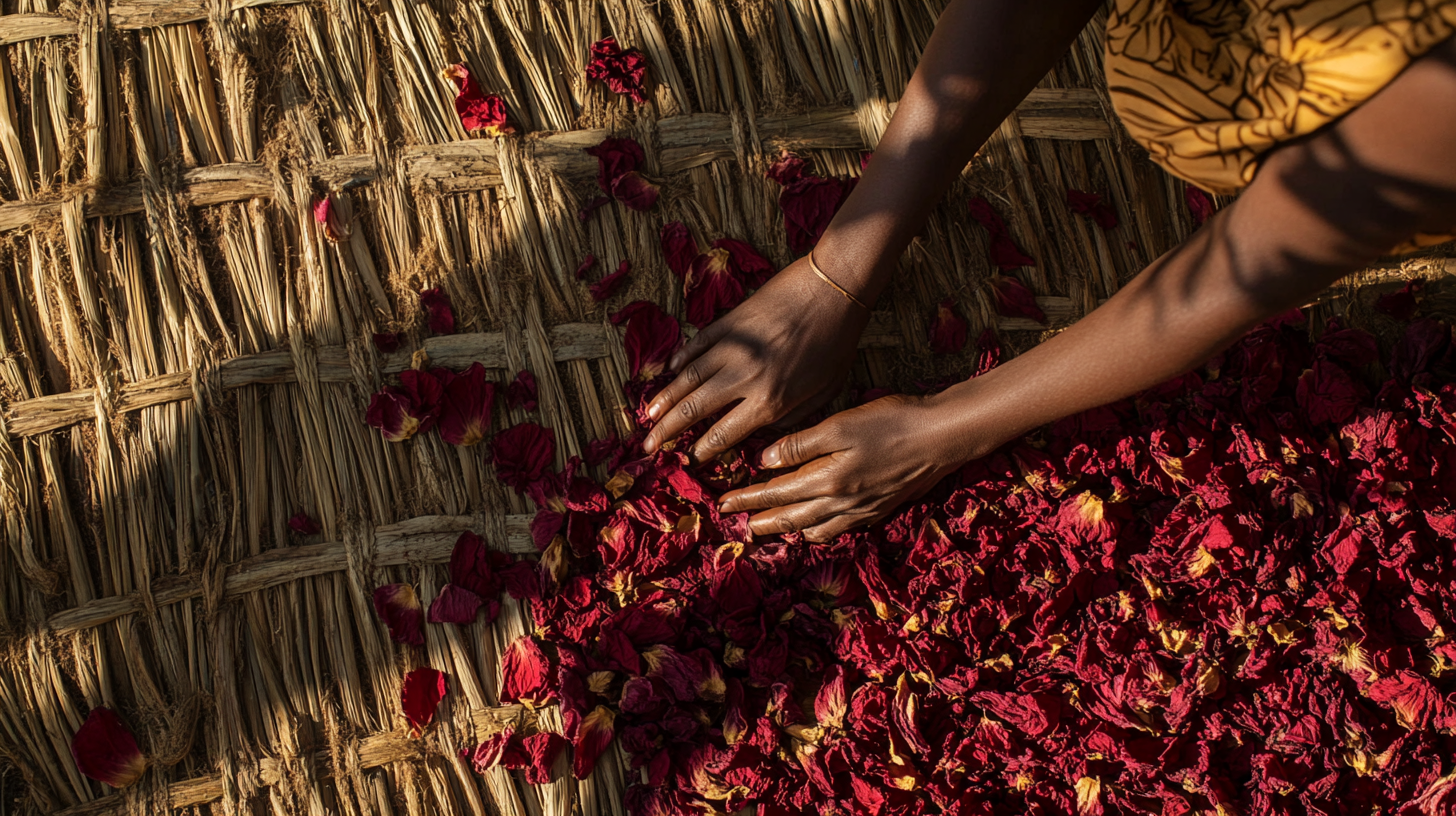
What Senegal Has Done Differently
Senegal has not built a dominant hibiscus export empire. To be clear about the scale: Senegalese hibiscus export volumes are modest compared to Nigeria's. But Senegal has done something more strategically interesting than shipping large volumes of commodity product.
It has allowed its domestic cultural relationship with bissap to inform how it presents to the world.
Companies like Inspire Export are exporting certified organic dried hibiscus under a Senegalese identity that is coherent — you know where it comes from, what it means culturally, and you can say something true about it to a buyer in Paris or Lyon. Dakar is two hours from Paris by air. ASEPEX, Senegal's export promotion agency, has actively positioned Senegalese agricultural products in European markets, including hibiscus, as part of a national trade identity rather than as a generic African commodity.
The result is that when European buyers of premium hibiscus think about African origins with a story attached, Senegal appears on the shortlist despite shipping a fraction of Nigeria's volume.
Nigeria ships more. Senegal tells a better story to the buyers who pay more.
The Mexico Comparison
There is a parallel worth understanding in Latin America.
Mexico exports hibiscus — locally called flor de Jamaica — in volumes that are modest by West African standards. But "Jamaica hibiscus" commands a genuine premium in the United States Hispanic grocery market and in the craft beverage sector. It has a geographic-cultural identity that buyers trust and will pay for. Agua de Jamaica on a restaurant menu means something. It signals provenance, flavour profile, and culinary authenticity in a way that "dried hibiscus calyces, origin unspecified" never will.
The product is botanically identical to Nigerian or Senegalese hibiscus. The margin difference is not in the plant. It is in the story constructed around it, sustained over decades of consistent cultural positioning.
Neither Mexico nor Senegal has cracked the code on fully capturing the processing margin — the transition from dried calyx to branded consumer product still happens overwhelmingly in the destination market. But they have moved earlier in the value chain than pure commodity exporters, and that earlier position earns them pricing that commodity exporters cannot access.
The Central Africa Question
This brings us to the question the headline poses.
The Congo Basin and the broader Central African region — DRC, Congo-Brazzaville, Cameroon, CAR — have hibiscus growing conditions that match or exceed West Africa in potential. The crop is not foreign to the region. The climate is suited. The land is there.
What Central Africa does not yet have is the equivalent of bissap — a culturally embedded, locally named, regionally identified version of this ingredient that gives it a geographic story a Western buyer can attach premium pricing to.
This is not an insurmountable gap. It is a branding and positioning gap, which is a fundamentally different kind of problem than a farming or logistics gap.
The Lubembo model offers one version of what this could look like. Our sourcing from the DRC — honey, botanicals, ingredients from the Congo Basin — is built on the idea that provenance from this specific ecosystem, documented and traceable, is itself a differentiator. A jar of honey from Bandundu forest can command a premium not because it is chemically superior to other honey, but because the Congo Basin origin is distinctive, verifiable, and emotionally compelling to buyers who are looking for authentic African origin stories.
The same logic applies to hibiscus. Hibiscus sourced from smallholder cooperatives in the Congo Basin, documented through GPS-enabled traceability, certified for export, and marketed under a coherent Central African origin identity, is a different commercial proposition than generic West African hibiscus competing on price alone.
The question is whether there are operators in the region with the patience and the structural commitment to build that identity over years rather than quarters.

What It Actually Requires
Brand building in agricultural commodities is a long-cycle investment. Senegal did not build the bissap identity in a trade show. Mexico did not brand flor de Jamaica through a marketing campaign. These things accumulated over generations of consistent domestic use becoming legible to international buyers over time.
The shortcut for Central Africa — if there is one — is certification and traceability infrastructure that makes the origin story verifiable rather than merely claimed. European buyers are increasingly willing to pay a premium for ingredients that come with documented provenance precisely because the regulatory environment now requires it. EUDR, supply chain due diligence directives, ESG reporting frameworks — these regulations are, accidentally, creating the commercial conditions under which a well-documented Central African hibiscus origin could command the price premium that an undocumented West African commodity volume cannot.
The infrastructure that makes compliance possible is also the infrastructure that makes a brand credible.
The question for Central African operators is whether they will build that infrastructure before the next wave of European compliance requirements makes it mandatory rather than merely advantageous.
Senegal did not build a hibiscus export empire. It built something more durable: a recognizable identity within a category that most of its competitors treat as a bulk commodity.
Central Africa has the raw material to do the same.
The bissap is already in the Congo Basin. It just doesn't have a name yet.
The Intelligence Brief is Lubembo Intel's monthly opinion column — grounded in operational observation and market data.
Lubembo Intel | Ground Truth African Intelligence | lubembointel.com


