

The Buyer's Desk answers one real question from buyers, importers, and procurement teams navigating African botanical supply chains. No spin. Just the operational reality.
It's the most common thing we hear from European and American buyers after a first inquiry: "We love the product. We love the origin story. But we need volume consistency before we can build it into our formulations. Can you guarantee it?"
The short answer is: most African moringa suppliers genuinely cannot. Not because they're being evasive. Because the question assumes a supply chain structure that doesn't yet exist at scale in most African origins.
Here's why — and what to do about it.
The Moringa Supply Chain in Africa Doesn't Work Like India's
If you've sourced moringa before, you've probably sourced it from India. India supplies roughly 80% of global moringa demand, with vertically integrated processors like Grenera Nutrients and Ancient Greenfields running operations that combine commercial farming, dedicated drying infrastructure, milling capacity, and certified export documentation under one roof.
When an Indian supplier says they can deliver 20 tonnes of certified leaf powder to Rotterdam in 60 days, they mean it. Their constraint is demand, not production.
In Africa — Kenya, DRC, Senegal, Tanzania, West Africa — the structure looks entirely different. What you're typically dealing with is:
Smallholder production with no aggregation layer. Moringa in African contexts is grown on small plots by individual farmers or in cooperative structures where production decisions are made seasonally, informally, and without committed volume targets tied to buyer agreements.
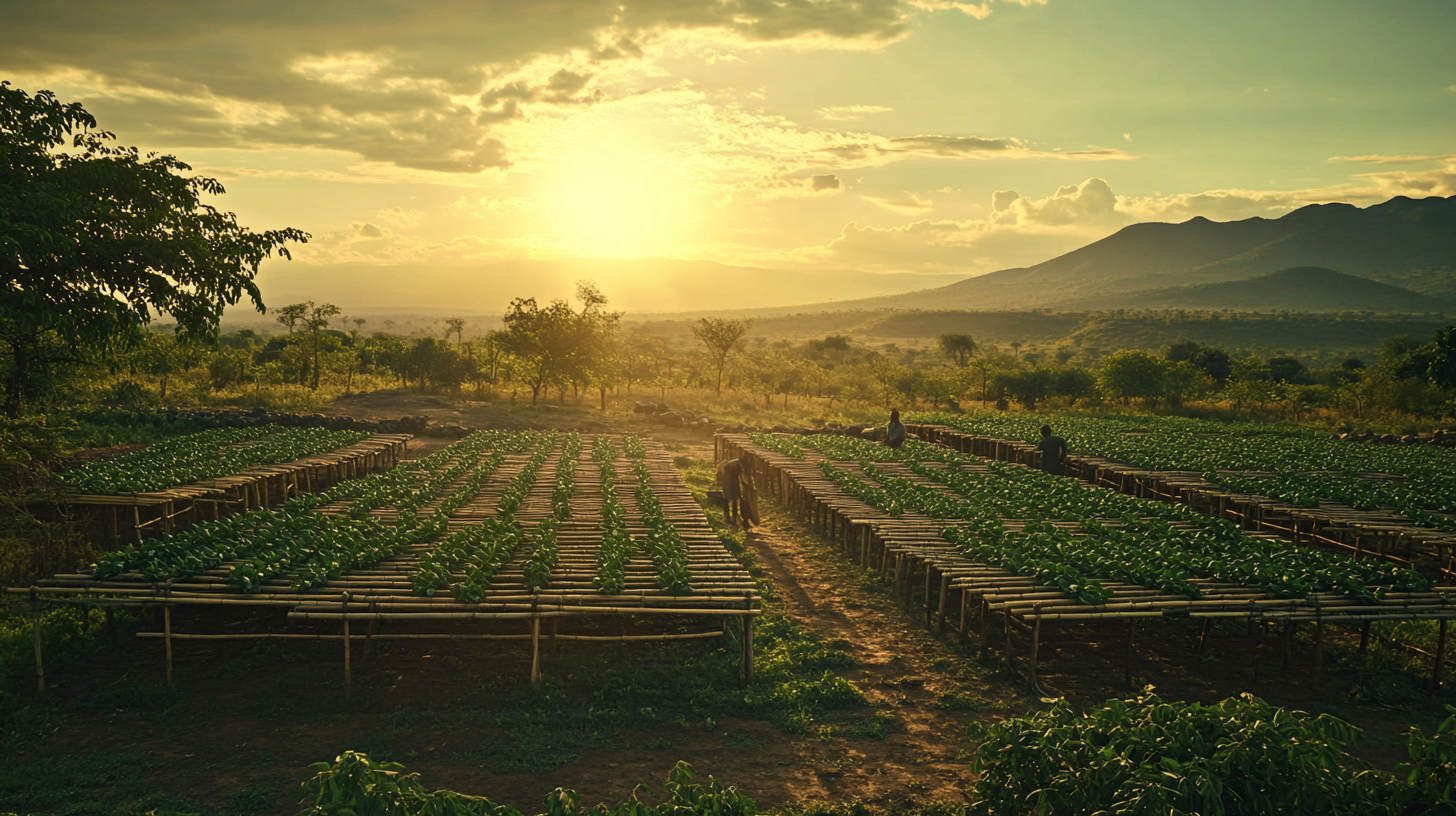
Drying that depends on the sun. Controlled drying — the kind that preserves nutrient content, prevents mould, and delivers consistent moisture levels — requires energy. Solar dryers or electric dryers require capital investment that most African smallholder operations have not made. Sun drying is the default. Sun drying produces variable results that serious buyers can detect in lab reports.
No dedicated milling. Milling moringa to the particle size European nutraceutical buyers expect — fine, consistent powder with guaranteed marker compounds — requires a hammer mill and quality screening. In most African producing regions, this infrastructure is either absent or shared between crops, introducing contamination risk and scheduling constraints.
The result: an African supplier who honestly wants to fill your order is constrained not by the trees or the farmers, but by three things they cannot improvise — energy, equipment, and lead-time planning.
The Question Behind the Question
When buyers ask about volume guarantees, they're really asking about two things: predictability and quality consistency.
These are different problems.
Predictability is a supply chain planning problem. It's solved by committed purchase agreements, seasonal advance payments to producers, and aggregation structures that lock in volume before harvest rather than chasing it after.
Quality consistency is a processing problem. It's solved by drying infrastructure, standardised handling protocols, lab testing at origin, and transparent documentation. Without controlled drying and verified processing, the same moringa that tests well in October can test poorly in March.
Most African moringa suppliers can improve on predictability faster than on quality consistency — because predictability mainly requires commercial commitment between buyer and supplier, while quality consistency requires capital investment in physical infrastructure that takes time to build.

What Good Sourcing Practice Actually Looks Like
The buyers who manage to build reliable African moringa supply chains tend to do one thing differently: they stop treating the first order as a test and start treating it as an investment.
Specifically, they:
Commit to a volume over a season, not a single purchase. A supplier who knows they need to produce 5 tonnes over 6 months can plan harvesting rotations, manage drying capacity, and coordinate with cooperative members in a way that a spot order of 500kg never enables.
Pay a percentage on order confirmation. Advance payment is not a favour to the supplier. It's what funds the aggregation, the drying, and the packaging. Without it, suppliers are fronting capital they don't have.
Accept a slightly higher price for documented traceability. The EU moringa ingredients market is valued at €180–250 million at wholesale level in 2026, driven by demand for standardised, traceable inputs. That premium exists precisely because consistent, documented supply is genuinely rare from African origins. Buyers who price-negotiate hard against African suppliers are optimizing for the wrong variable.
Build in a quality review visit or remote verification before scaling. Sending a procurement team or a trusted third party to assess drying, storage, and processing conditions before placing a significant order is not due diligence overkill. It's how you find out whether the operation behind the product matches what was described.
The Honest Reality Check for Buyers
If your procurement model requires guaranteed volume from African moringa origins without any of the above commitments from your side, you will keep having the same conversation — impressive samples, promising communication, and then a delivery that falls short in quantity, quality, or both.
The guarantee you're asking for exists in India because Indian processors built it over decades with capital investment, commercial infrastructure, and consistent buyer relationships that allowed that investment to be justified.
Africa is earlier in that cycle. The potential is structurally identical — arguably better, because African moringa cultivation is less industrialised, which means lower pesticide exposure and stronger organic positioning. Certification and export costs remain capital-intensive for smallholder-linked supply chains, but the underlying product quality from well-managed African operations is competitive with any origin.
The question isn't whether African moringa can be guaranteed at volume. It's whether your procurement approach creates the conditions for that guarantee to become possible.
Most of the time, both sides are waiting for the other to move first.
What Lubembo Tracks
At Lubembo, we work with producer networks in DRC and Kenya and track moringa supply chain development across East and Central Africa. Our aggregator model is built specifically on the commitment structure described above — advance agreements, documented processing standards, and traceability at each stage.
If you're a buyer looking to build a reliable African moringa supply relationship rather than conduct another failed spot-buy test, our network is worth a conversation.
The Buyer's Desk publishes monthly. Each edition addresses one question that buyers, importers, and sourcing teams are actually asking about African botanical supply chains.
Have a question for the next edition? Reach us at hi@lubembo.co
Lubembo Intel | Ground Truth African Intelligence | lubembointel.com


