

Baobab, moringa, ginger and turmeric are already being processed in the DRC. The missing piece isn't the product. It's everything around it.
The Industry Nobody Is Counting
Ask most international buyers whether the Democratic Republic of Congo (DRC) has a superfood industry and the answer is usually no. The country appears in global conversations about cobalt, copper and forest conservation. Baobab powder, moringa and ginger rarely make the list.
But the industry is already there, just not where buyers are looking.
This autumn, Congolese women entrepreneurs showcased locally produced baobab, moringa, ginger, turmeric, cocoa and other products at FICKIN in Kinshasa. ACP's reporting on the event flagged the same three obstacles that anyone sourcing in this country will recognize immediately: the cost of packaging, the cost of transport, and consumer trust.
None of those obstacles is about agriculture. Not one of them is about whether the plants grow.
That is the real story behind the showcase. The DRC doesn't have a raw material problem. It has a scaling problem, and the reasons are specific enough to name.
Where the Industry Already Exists
Processing in the DRC is real and often further along than outsiders assume.
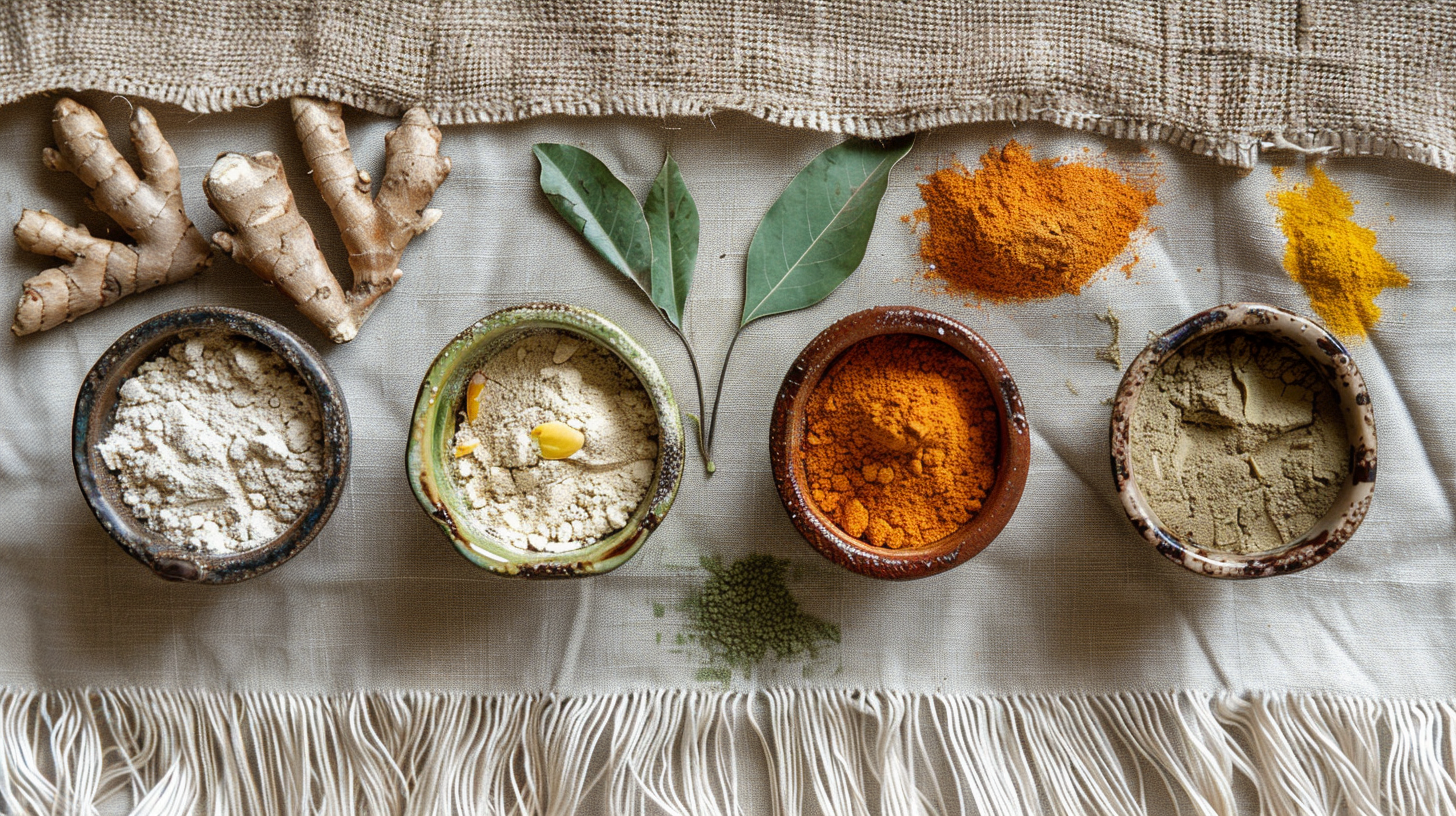
In Kinshasa, small processors turn baobab pulp into juice and powder. Women's cooperatives and small enterprises make dried ginger, moringa leaf powder and spice blends for neighbourhood markets and local retail. Confederations of small and medium enterprises, COPEMECO among them, have been running agri-food processing training for women entrepreneurs for years. One trainer quoted in earlier ACP coverage made the point directly: many of these women already work in food processing, but the products don't yet meet formal standards, and the goal is to see them export.
We have seen the evidence ourselves. A 100-gram jar of powder produced in Goma, carrying a lot number, a manufacture date and an expiry date, is a more advanced product than most buyers would expect from the region. Someone has already made decisions about batching, labelling and shelf life.
The industry exists. What it lacks is the infrastructure that turns a small producer's good product into something a distributor, a retailer or an overseas buyer can reorder with confidence.
Obstacle One: Packaging Is Not a Detail
In most agricultural conversations, packaging is treated as an afterthought, the last step before shipping. In the DRC's superfood sector it is often the single biggest cost line between a finished product and a sellable one.
Food-grade jars, pouches with proper seals, printed labels and barrier packaging that keeps moisture out of a hygroscopic powder are frequently imported, which means they are priced in dollars, delayed at the border and bought in small quantities at unfavourable unit costs. A producer making a few hundred kilograms a month cannot negotiate minimum-order pricing the way a larger Kenyan or South African processor can.
The result is a pricing problem that looks like a product problem. A good powder in expensive, inconsistent packaging either prices itself out of the local market or sells at a margin too thin to reinvest.
Compare that with what a Kenyan supermarket shelf looks like. On a recent visit we recorded a 150-gram jar of locally produced baobab powder at KSh 370 and a 150-gram jar of moringa leaf powder at KSh 467. At roughly 130 shillings to the dollar, that works out to around $19 and $24 per kilogram at retail. Both products carried a "Made in Kenya" mark, a standards-bureau certification mark, a barcode, nutrition information, a batch number and a dated expiry.
The product inside is not radically different from what a Congolese processor makes. The infrastructure around it is.
Obstacle Two: Transport Quietly Erases the Margin
The second obstacle is geography, and anyone who has watched a road collapse in the DRC understands it viscerally.
Raw material in this sector tends to originate far from the cities where processing, packaging and sales happen. Baobab pockets in Kongo Central, forest honey in Équateur and ginger-growing zones are rarely adjacent to the processing facilities or the ports. Moving goods over unreliable roads adds cost, time and, for products sensitive to moisture and heat, quality risk.
For a small producer, the effect is compound. Higher transport cost raises the price of raw material at the processing site. Delays raise the chance that the product degrades before it is packed. And because volumes are small, the producer pays the high per-unit rate for moving them.
This is why we keep coming back to aggregation. A processor receiving consistent, consolidated volume from a defined catchment area has a fundamentally different cost structure from one buying a few sacks at a time from whoever turns up.
Obstacle Three: Trust Is a Product Feature
Consumer trust is the least tangible of the three obstacles and probably the most decisive.
A buyer deciding whether to put an unfamiliar African powder into a formulation, or a Congolese shopper deciding whether to choose a local jar over an imported brand, is asking the same question: can I rely on this being what it says it is, every time?
In practice, trust is built from boring things. A consistent batch. A label that discloses ingredients and dates. A producer who answers questions about drying and storage. A test result that stays the same from lot to lot. Imported brands benefit from decades of this accumulated reputation. Local producers have to build it from zero, one jar at a time, usually without access to the laboratory testing that would let them document it.
Seen this way, the work of scaling the Congolese superfood sector is largely the work of manufacturing trust at small scale: standardized processes, documented quality and reliable supply.
What Scaling Actually Requires
If the showcase tells us what the obstacles are, the next question is what would remove them. Four things stand out from our own sourcing experience.
Shared packaging access. A cooperative or aggregator that buys packaging in volume and supplies it to small processors converts a dollar-denominated, minimum-order problem into a manageable input cost.
Aggregation hubs near production. Consolidating raw material close to where it is harvested, before the long road to the city, reduces transport cost per kilogram and gives processors consistent input.
Access to testing. A producer who can attach a moisture and microbiological result to a lot is selling a different product from one who cannot, even if the powder is identical.
An off-take relationship. Nothing builds a processor's confidence to invest in equipment and packaging like a buyer who has committed to purchase what is made. This is the piece that most often turns a promising small producer into a reliable supplier.
None of these requires a large factory or a billion-dollar investment. They require coordination, modest capital placed in the right nodes, and a buyer on the other end.
Why This Matters Beyond Kinshasa
The DRC's government has said it wants to diversify its export base beyond minerals. Agricultural and indigenous-product exports are an obvious candidate, but only if the intermediate layer exists: the aggregators, shared processing capacity and documentation that connect small producers to buyers.
For international buyers, the practical takeaway is that Congolese supply is not absent. It is early. The producers worth watching are those who already show the habits of a reliable supplier: lot coding, dated labels, willingness to answer sourcing questions and an openness to testing.
For investors, the most valuable capital here is not another round of farmer training. It is the packaging, aggregation and testing layer that lets existing producers scale.
The Takeaway
The Congolese superfood industry is not something waiting to be created. It is already making baobab powder, moringa, ginger and turmeric, and selling them to people who know and trust the producers.
What it needs is the connective tissue that lets a product made well in Kinshasa or Goma become a product that can be reordered reliably by a buyer in Brussels, Dubai or Nairobi. Packaging, transport and trust are the points where that connection currently breaks.
That is a solvable problem, and it is exactly the layer where we spend our time.
THE LUBEMBO SIGNAL
Demand: ↑ Supply: → (existing, but small and fragmented) Processing: ↑ (local activity growing from a low base) Pricing: →
Our view: The DRC's superfood sector is not short of products. It is short of packaging access, consolidated volume and documented quality. Whoever supplies those three will unlock the supply that already exists.
Lubembo Intelligence documents how African superfood supply chains actually work, from the processing floor to the export container. We are also an active aggregator sourcing in the DRC and Kenya.
If you produce baobab, moringa, ginger, hibiscus or honey, or you are a buyer looking for dependable African supply, we would like to hear from you at hi@lubembo.co. Subscribe to Lubembo Intel for new analysis every week.


