

Western impact capital targets African agribusiness but SME scaling remains stubbornly low. We analyze the structural mismatch—and why Chinese capital often executes where others stall.
We built a Capital–Reality Alignment Framework to help founders and investors assess fit before time and resources are lost.
→ For Founder: Access | For Investors: Access | For Capital Alignment: Access
The Paradox
Western impact capital increasingly targets African agribusiness and trade — yet SME scaling remains stubbornly low, especially in Francophone and Central Africa.
This isn't a mystery. It's a structural contradiction.
Funds announce climate-aligned mandates for the Congo Basin. They commission deforestation strategies for Francophone Africa. They hire analysts to map superfood value chains from Senegal to DRC. The capital exists. The intent appears genuine.
And yet: the trucks don't get bought. The depots don't get built. The processing equipment stays on wishlists. The honey, hibiscus, baobab, and moringa that could flow to export markets stays stuck at the farm gate.
Agribusiness and trade logistics are the real test case for impact capital in Africa. These aren't speculative bets on future technology. They're tangible operations with buyers, routes, and margins. If capital can't reach these businesses, the mandate isn't working.
By The Numbers: The Allocation vs. Deployment Gap
Before we analyze the structural causes, consider the scale of the disconnect:
What's been publicly announced:
- $80 billion in impact investment assets under management allocated to Africa (GIIN/FERDI, 2024)
- $44 billion in climate finance flows to Africa in 2021/22—a 48% increase from 2019/20 (Climate Policy Initiative)
- $1.5 billion earmarked specifically for Congo Basin forest protection at COP26
- $6.6 billion committed by DRC alone to its Agriculture Transformation Programme over 10 years
- 52% of top 300 global impact investors planning to increase Africa allocations by 2025 (GIIN)
What's actually happening (reality):
- 138 total venture-backed exits across all of Africa from 2019–2024—an exit-to-investment ratio of just 0.13x (13 cents returned per dollar deployed)
- Only 26 venture-backed exits in 2024 continent-wide
- Zero publicly disclosed Series A or B agribusiness deals in DRC by Western impact funds in the past 3 years
- Zero reported agribusiness exits in Central Africa in any publicly available database we reviewed
- 84% of all African exits are trade sales; IPOs remain virtually non-existent outside South Africa
The DRC specifically:
- FDI inflows of $1.63 billion in 2023—but 95%+ goes to extractives (mining, oil)
- Agriculture employs 60% of the population and contributes 19.7% of GDP—yet receives a fraction of investment attention
- The Climate Investment Fund has approved just $28.5 million across only 3 projects in DRC as of 2023
The question this data forces:
If $80 billion is allocated and $44 billion is flowing, where is it going? Not to the SME layer. Not to agribusiness logistics. Not to the founders who actually need $100–300K to buy trucks and build depots.
The capital exists on paper. The deployment to operational agribusiness SMEs—especially in Francophone and Central Africa—is statistically invisible.
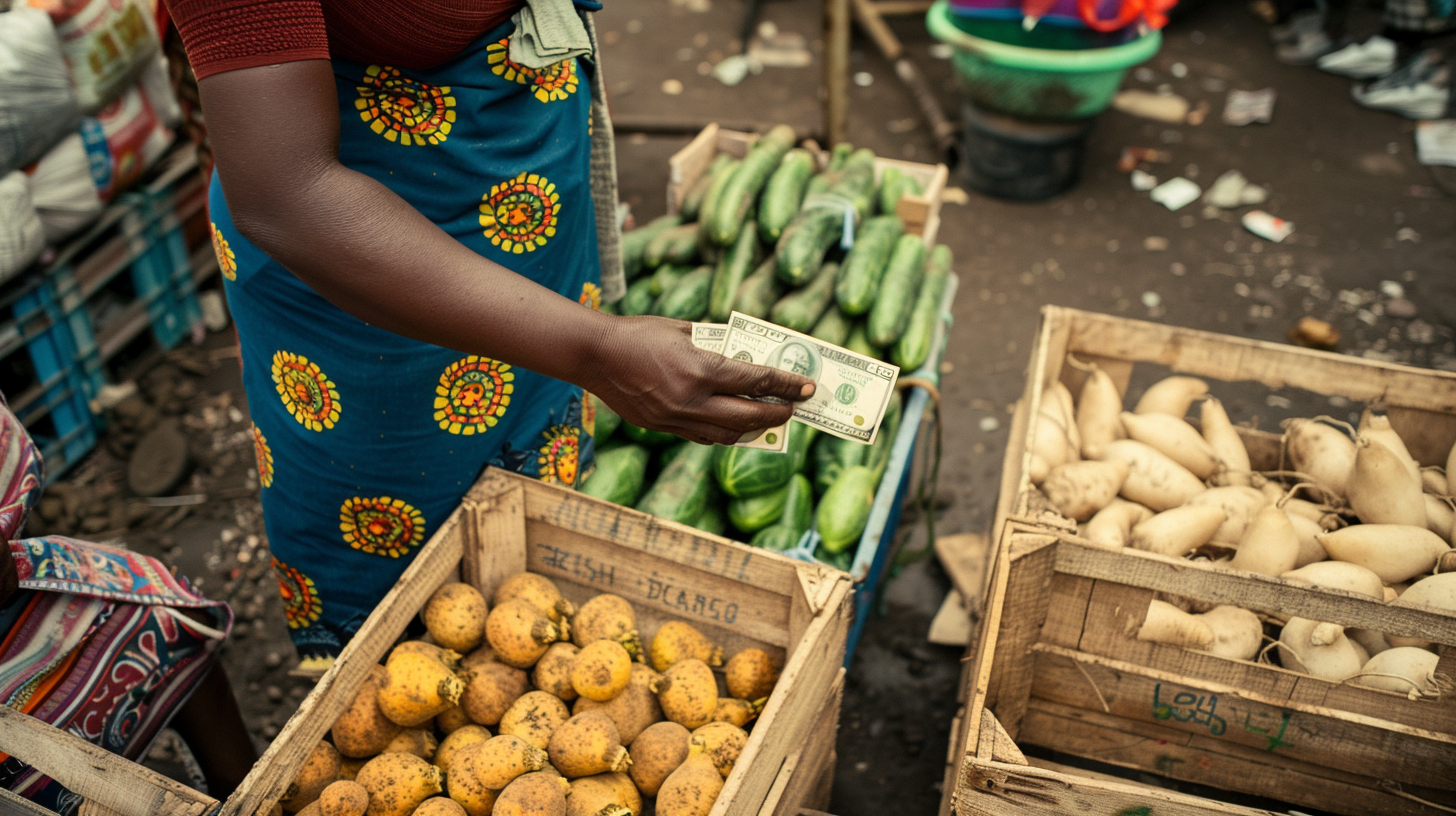
The Core Mismatch: Risk-Averse Capital vs. Informal Markets
The conflict at the heart of Western impact investing in Sub-Saharan Africa
| What Western/Impact Funds Want | The DRC/African SME Reality | Resulting Consequence |
|---|---|---|
| Standardized Due Diligence (audits, certified books, FSC/ISO certs). | Informal & Adaptive Systems (trust-based, cash transactions, rare formal documentation). | Funds see only "risk." Founders see impossible, costly hoops. |
| Clear, Direct Impact Metrics (e.g., trees planted, hectares preserved). | Integrated, Indirect Impact (our aggregator model: economic lift enables reforestation). | Nuanced models don't fit their rigid impact KPIs. |
| Large "Sizable" Checks ($1-5M) to move their own needle. | Gradual, Asset-Based Scaling (needing $50k for a truck, $150k for a depot). | The "missing middle": SMEs are too big for microloans, too small for equity rounds. |
| Predictable "Silicon Valley" Trajectory. | Survival-First, Nonlinear Growth (bartering, pivots, infrastructure gaps). | Founders' business acumen is misjudged; their resilience is undervalued. |
What Public Disclosures Suggest
Over the past five years, commitments to African agribusiness, climate-smart agriculture, and deforestation-linked value chains have grown substantially. Publicly available fund announcements, DFI reports, and impact investor disclosures suggest:
- Climate and agriculture-focused funds targeting Sub-Saharan Africa often operate with ticket sizes of $1–5 million at minimum
- Deforestation and Congo Basin mandates have attracted significant attention, particularly post-COP26
- "SME-focused" funds frequently define SMEs as businesses with $500K+ annual revenue—a threshold that excludes most early-stage agri-exporters
The capital is real. The mandates are documented. The question is deployment.
The SME Death Zone
Most African agribusiness SMEs—especially in trade, processing, and export logistics—need capital in the $50,000 to $300,000 range. A truck. A depot. Working capital for a container. Processing equipment to move from raw to value-added.
This creates what operators call the SME death zone:
- Too large for microfinance (which caps at $10–50K and charges 25–40% interest)
- Too small for institutional tickets (which start at $500K–1M and require extensive due diligence)
- Too operational for grant funding (which favors NGOs, pilots, and "innovation")
The result: founders with buyer traction, proven supply chains, and clear unit economics—stuck.
A quick diagnostic: are you stuck in the SME death zone?You need $100–300K to scale, but grants are too small and equity is too expensiveYou've spent 6+ months in "due diligence" with no term sheetInvestors want 3 years of audited financials in a market where 80% of transactions are cashYou're being asked to pivot your model to fit fund mandates (e.g., "add a carbon component")
If this sounds familiar, you're not alone. This is structural, not personal.
What Isn't Disclosed
Here's where defensible evidence density gets harder—because the data that matters most is rarely published.
What funds disclose:
- Mandate size and geography
- Sector focus
- Portfolio company logos (often post-success)
What funds don't consistently disclose:
- Deal conversion rates (applications to term sheets to deployment)
- Time from first contact to capital deployment
- Exits and realized returns in Francophone/Central Africa specifically
- How much founder time was consumed in unsuccessful due diligence processes
This asymmetry matters. A fund can announce a $50M Congo Basin mandate and deploy $2M over three years—and still report "active deployment." Founders who spent 12 months on audits that led nowhere don't appear in any annual report.
Enough data to make disagreement uncomfortable — not enough to make debate the point.
We built a Capital–Reality Alignment Framework to help founders and investors assess fit before time and resources are lost.
→ For Founder: Access | For Investors: Access | For Capital Alignment: Access
Operator-Level Friction
At the ground level, the friction compounds.
Audit inflation: Many Western funds require certifications (FSC, ISO, GFSI) that either don't exist locally or cost more than the capital being sought. Take Congo (DRC) for example, there is no ISO-accredited lab that can run a full EU food-safety panel. Founders are asked to produce documentation that the local infrastructure cannot support.
Due diligence loops: A recurring pattern: 6–12 months of information requests, site visits, "just one more audit"—with no binding commitment. Founders burn cash and attention on compliance theater while operations stall.
Informality penalties: In markets where 70–80% of transactions are informal (cash, mobile money, handshake agreements), requiring "3 years of audited financials" is not risk management. It's exclusion by design.
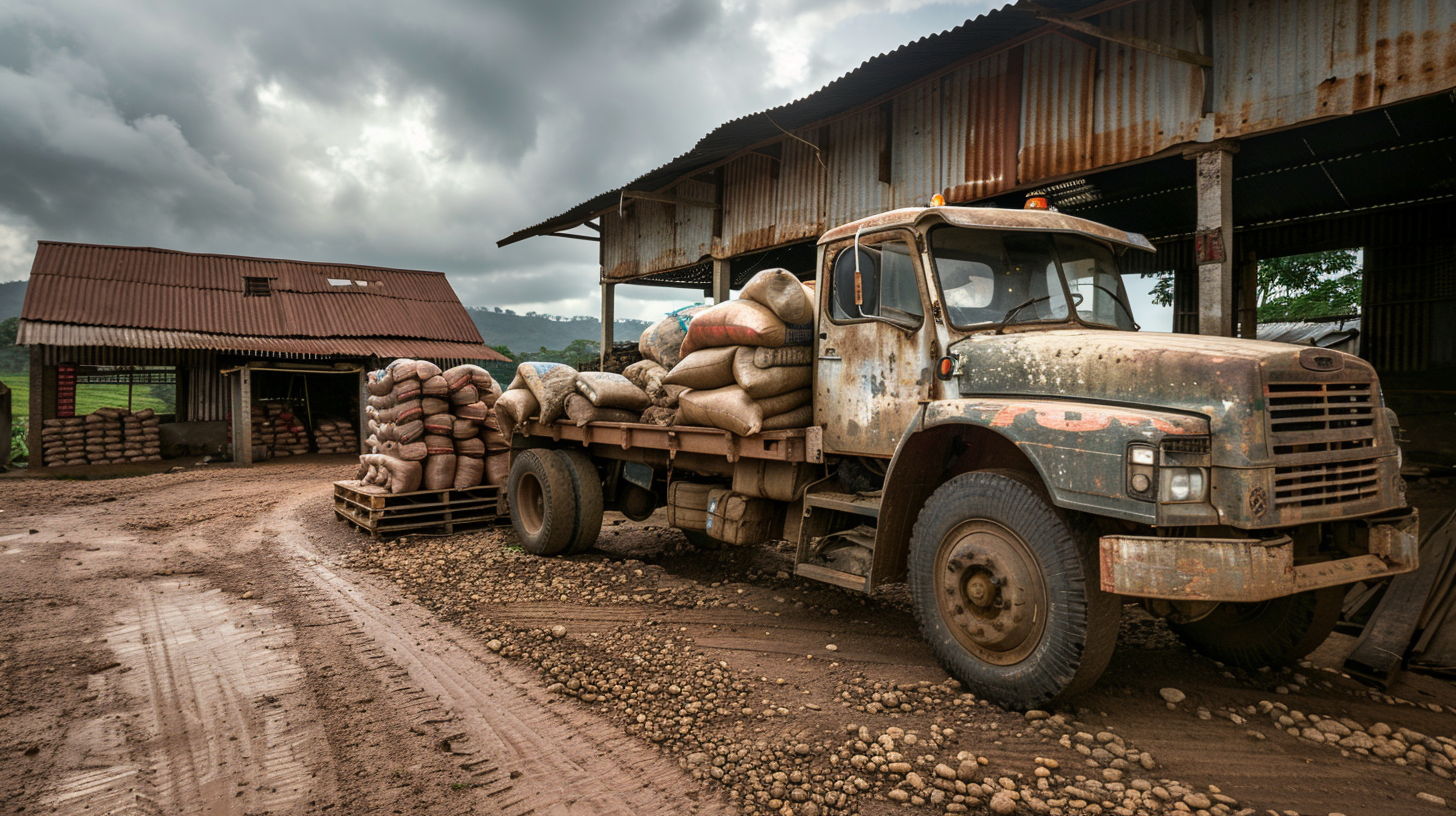
Logistics blind spots: Many funds underwrite "production" or "impact" but ignore the binding constraint: moving product from farm gate to port. A honey aggregator doesn't need another beekeeper training grant. They need a truck and a cold storage depot.
This is what audit-first, capital-last looks like in practice. The process is designed to create certainty before deployment. But in frontier markets, certainty is a product of execution—not a precondition for it.
China's Adaptation Advantage
Any honest analysis must acknowledge: Chinese capital often executes where Western impact capital stalls.
This isn't ideology. It's observable behavior.
How Chinese capital frequently operates in African agri-logistics:
- Asset-backed, not audit-backed: Loans secured against trucks, warehouses, equipment—not financial statements
- Throughput-focused: Underwriting capacity and volume, not compliance metrics
- Relationship-based due diligence: Site visits, local partners, and community validation rather than third-party auditors flown in from Europe
- Speed: Deals close in weeks or months, not years
Different capital architectures produce different outcomes.
This doesn't mean Chinese capital is without trade-offs. Knowledge transfer is often limited. Governance structures can create dependency. Local capacity-building may not be prioritized. Loan terms with no clear reciprocal long term gain. These are legitimate concerns.
But the comparison is instructive: one model prices risk upfront and adapts to messy contexts. The other seeks to engineer certainty through compliance—and often deploys nothing while waiting.
Western funds seeking frontier returns with OECD certainty face a structural contradiction. The math doesn't work. Either adjust the risk model or adjust the return expectations.
We built a Capital–Reality Alignment Framework to help founders and investors assess fit before time and resources are lost.
→ For Founder: Access | For Investors: Access | For Capital Alignment: Access
What Better Capital Design Looks Like
This isn't a policy argument. It's a practical one. Capital structures that work in frontier agribusiness tend to share common features:
- Smaller initial tranches ($50–150K) tied to operational milestones, not compliance milestones
- Asset-backed structures that use trucks, equipment, and inventory as collateral—not just financial covenants
- Blended technical assistance that supports execution (logistics, buyer development, quality systems) rather than trapping founders in reporting cycles that artificial intelligence can now generate at the speed of light
- Underwriting throughput: Can this business move 20 tons of product to port? That's the question—not "do they have an FSC certificate?"
- Local intermediaries as due diligence partners, not European auditors justifying travel budgets
None of this is radical. It's how trade finance has worked for centuries. The innovation isn't the structure—it's applying it to sectors and geographies that institutional capital has overcomplicated.
In Conclusion
Western impact capital increasingly targets African agribusiness and trade — yet SME scaling remains stubbornly low, especially in Francophone and Central Africa. Sooner than they think, the Chinese Capital will supersede them.
The capital exists. The mandates are announced. The founders are ready.
The mismatch is structural: ticket sizes that skip the SME layer, due diligence requirements that don't match local infrastructure, and risk models designed for stable markets applied to frontier contexts.
Chinese capital succeeds in these environments not because it's better—but because it's designed differently. Different capital architectures produce different outcomes.
For founders: the goal is not to perform investability for misaligned capital. It's to find capital that fits your operational reality—or build leverage until you can dictate terms.
For investors: the opportunity isn't in the $2M platform play. It's in the $150K truck that unlocks 45 tons of export volume. That's where the returns are. That's where the impact is.
We built a Capital–Reality Alignment Framework to help founders and investors assess fit before time and resources are lost.
→ For Founder: Access | For Investors: Access | For Capital Alignment: Access
Lubembo Intel is an operator-led market intelligence platform covering African superfoods trade, export logistics, and capital flows. We publish what we learn from executing—not from desks.


