

We built 120 hives and colonized 65. Expected 10 tons. Produced 40 liters. Paid $100/hive in 2022—then learned the real price was $60. Here's what African beekeeping taught us about production, pricing, and why documentation matters.
Two Confessions
I'm going to tell you about two failures. Not because they make us look good—they don't—but because together they explain why African beekeeping remains stuck at subsistence level while global demand for African honey keeps growing.
Failure #1: We expected 10 tons of honey. We produced 40 liters.
Failure #2: We paid $100 per hive in 2022. The real price, we now know, was $60.
The first failure taught us about production bottlenecks. The second taught us about pricing opacity in informal markets.
Both failures share the same root cause: operating without benchmarks in an environment where documentation doesn't exist and repetition is the only teacher.
This post explains what went wrong—structurally, not personally—and why the real barriers to African beekeeping aren't land, climate, or skill. They're information asymmetry, misaligned training, and the hidden cost of being early.
Part 1: The Production Failure
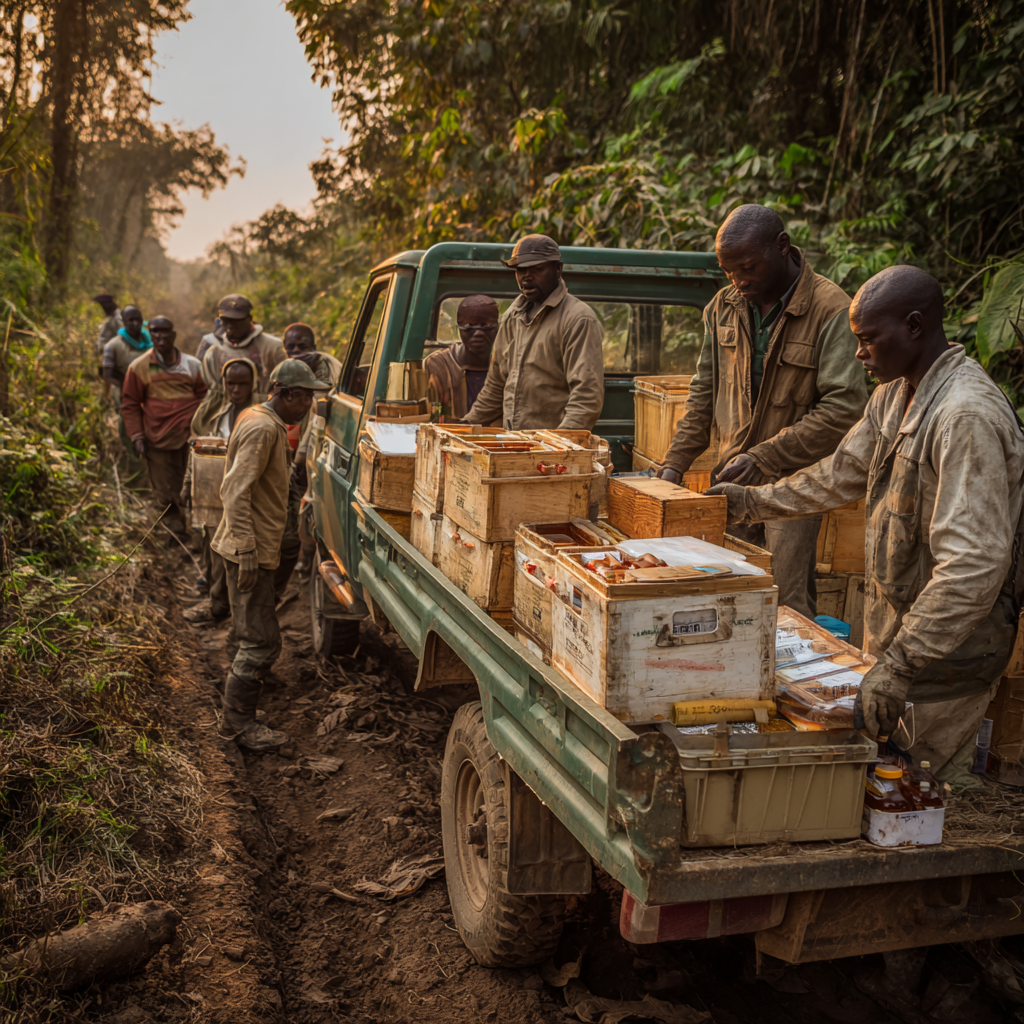
Three years ago, we started a beekeeping operation on our farm in Bandundu, DRC. We partnered with experienced beekeepers—one had worked with WWF, another had trained with multiple NGOs over decades. These were not amateurs.
They told us: 100 hives should produce 10 tons per year.
That's 100 kg per hive. Reasonable by Western standards.
End of 2025, we produced 40 liters.
Not 40 liters per hive. 40 liters total. From 65 colonized hives.
That's 0.6 liters per hive. A 99.4% miss against the original projection.
At-a-Glance Numbers
| Metric | Value |
|---|---|
| Hives built | 120 |
| Hives colonized | 65 |
| Cost to colonize 65 hives | $490 (~$7.50/hive) |
| Colony capture rate | ~10 colonies/month |
| Expected annual production | 10 tons (10,000 liters) |
| Actual production (Year 1) | 40 liters |
| Realistic yield per hive (African forest systems) | 8–15 liters/year |
| Hives needed for 10 tons/year | ~1,200 (accounting for non-producers) |
| Spacing required (African bees) | 10–20 meters between hives |
| Hive price paid (2022) | $100/unit |
| Hive price quoted (2025, same consultant) | $60/unit |
| Initial setup investment (2022) | $10,530 |
| Price correction discovered | 40% overpayment on hives |
What We Got Wrong (And Why It's Structural)
1. NGO Yield Benchmarks ≠ Commercial Benchmarks
Our beekeepers were trained by NGOs. They're skilled. They know African bees. But NGO logic and commercial logic optimize for different things.
NGO logic: Any production is success. A cooperative that produces 500 liters and distributes income to 20 members is a "successful project."
Commercial logic: Predictable volume against committed buyers. If you've promised 10 tons to a meadery and deliver 40 liters, you've failed—regardless of how many livelihoods were "impacted."
Our beekeepers genuinely believed that being "on track" to produce 1 ton was impressive progress. Because in the NGO world, it is. In the commercial world, it's a 90% miss.
This isn't their fault. It's the system they were trained in.
2. African Bees ≠ Western Bees
If you've seen beekeeping operations in Australia, Canada, the US, or Europe, you've seen Langstroth hives stacked vertically—sometimes 3-4 supers high, packed close together.
You cannot do this with African bees.
African bees (Apis mellifera scutellata and related subspecies) are:
- Aggressive. They will attack neighboring colonies.
- Territorial. They compete intensely for pollen and nectar sources.
- Defensive. They require more space to avoid conflict.
The practical implication: you need 10–20 meters between hives in African systems. That's 5–10x the spacing of Western apiaries.
This means:
- Lower hive density per hectare
- More land required for the same number of hives
- More labor to manage dispersed colonies
- Lower yields per hive than Western averages
Western benchmarks (50–100 kg/hive/year) do not apply. 8–15 liters per hive per year is realistic for African forest beekeeping systems.
Our original projection of 100 kg/hive was a Western number applied to an African context. That was our first mistake.
3. Traditional Colony Capture Is Not Scalable
Here's how we colonized our hives:
- Spread the word to local villagers that we're looking for wild bee colonies
- When someone finds a natural hive in a tree, they alert us
- We transport an empty Langstroth hive to the location
- We attempt to capture the queen and transfer her to our hive
- Leave the hive on-site for ~1 week until the colony establishes
- Transport the colonized hive back to our forest
Cost: ~$7.50 per hive (including transport and labor payments to villagers)
That sounds cheap. And it is—per unit.
But the real cost is time.
Our beekeepers can colonize approximately 10 colonies per month using this method. That's the actual throughput constraint.
To reach 1,200 hives (what we'd need for 10 tons/year), at 10 colonies/month, we'd need 10 years just to colonize. And that assumes no colony losses, no absconding, no queen failures.
The bottleneck isn't hive construction. We can build hives quickly—Congo has abundant wood, and a $250 milling machine let us produce 50+ hives on-site.
The bottleneck isn't equipment. Smokers and protective gear we made locally.
The bottleneck is colony multiplication. The actual insemination and propagation of bee colonies at a rate that matches commercial demand.
4. The Colony Bottleneck Nobody Talks About
This is what NGO training doesn't prepare you for:
Scaling African beekeeping is not a hive problem. It's a bee problem.
Wild colony capture works for subsistence. It does not work for commercial production.
To produce at scale, you need controlled queen rearing and colony splitting—techniques that are standard in Western commercial beekeeping but almost nonexistent in Sub-Saharan Africa.
Our senior beekeeper mentioned he knows how to do artificial insemination and colony splitting. But:
- It requires sacrificing some producing hives as "nurseries"
- It requires training and equipment most African beekeepers don't have
- It requires capital investment that NGO-level operations never receive
Out of our 65 hives, he suggested using 10 as "ruches" (breeding hives) to multiply colonies for the remaining 55. That would accelerate colonization—but it requires upfront investment in a technique that's not taught at the cooperative level.
The NGO Trap
We want to be direct about this, because it matters for anyone trying to scale agricultural production in Africa.
NGOs have kept African beekeepers poor.
Not intentionally. But structurally.
Our lead beekeeper is 65 years old. He's worked with WWF. He's been beekeeping longer than any millennials has been alive. He earns $200/month.
He's part of a cooperative in Kongo-Central where:
- Members share income equally regardless of individual production
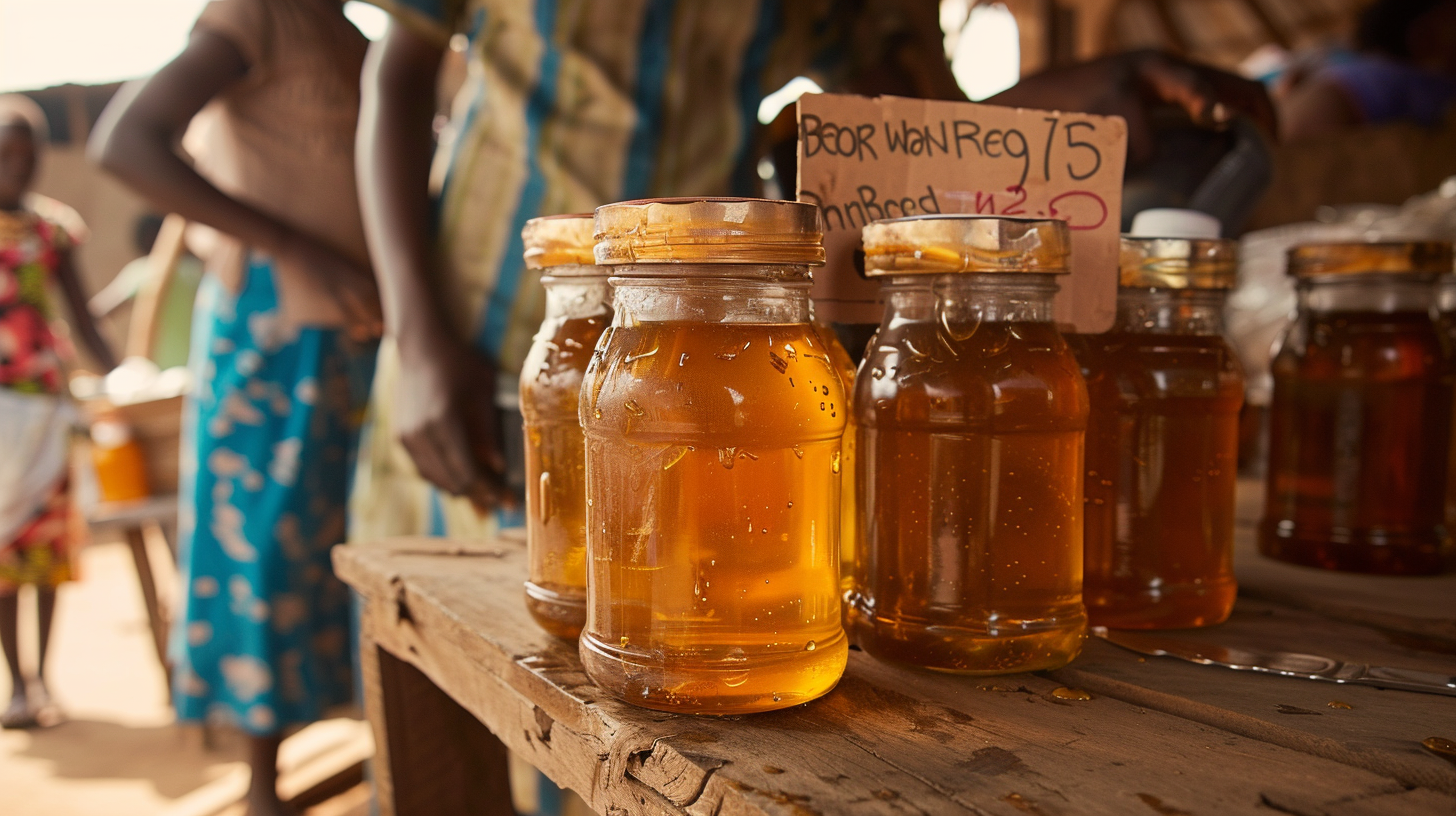
- Honey sells for $5/liter locally with little to no buyers so it seats in hot heat, ferments, and gets thrown out (too expensive per L to justify any investment in scaling)
- No incentive exists to increase personal output
- No capital is available for colony multiplication infrastructure
The cooperative model, as implemented by most NGOs, optimizes for participation and income distribution, not for production volume or commercial viability.
When we told our beekeepers we wanted 10 tons, they heard us. But in their mental model, being "on track" to 1 ton was already exceptional. Because in the cooperative world, it is.
This isn't a criticism of the beekeepers. It's a criticism of the system that trained them—and kept them there.
Kenya vs DRC: A Quick Comparison
We don't have comprehensive Kenya data yet (if you're reading this and have contacts in Kenyan beekeeping, please reach out). But here's what we know directionally:
| Factor | Kenya | DRC |
|---|---|---|
| Climate pressure | Severe drought has decimated production in recent years | Abundant rainfall, no water stress |
| Land availability | Limited; competition with agriculture | Vast; 80M+ hectares of forest |
| Commercial infrastructure | More advanced; bank loans for beekeeping exist; women-in-beekeeping programs | Almost nonexistent; no formal credit for apiculture |
| Technical know-how | More exposure to commercial techniques | NGO-level training dominates |
| Bee behavior | Same aggressive African subspecies | Same aggressive African subspecies |
| Colony multiplication | Unknown; likely similar constraints | Manual capture; ~10 colonies/month |
Kenya has the systems but lacks the land and climate stability. DRC has the land and climate but lacks the systems.
The opportunity is obvious: transfer Kenyan commercial know-how to Congolese production capacity.
But that requires capital for colony multiplication infrastructure—not more NGO cooperative grants.
Part 2: The Pricing Failure
While diagnosing our production miss, we discovered something else buried in our accounting records.
The 2022 Baseline: Paying for Execution, Not Benchmarks
In August 2022, when we launched our beekeeping operation in Kwilu (DRC), we contracted our senior consultant—a respected beekeeper with decades of NGO experience—to build and supply our initial equipment.
The budget he proposed:
| Item | Quantity | Cost/Unit | Total |
|---|---|---|---|
| Hives | 100 | $100 | $10,000 |
| Beekeeping outfits | 6 | $45 | $270 |
| Smokers (enfumoir) | 2 | $35 | $70 |
| Gloves | 6 | $25 | $150 |
| Brushes, frames, other | — | — | $40 |
| Total | $10,530 |
We paid. The hives were built at his farm in Kongo-Central, and using our logistics company, we transported to our site in Bandundu.
At the time, $100 per hive felt reasonable. We had no reference point. No comparable project. No benchmark data. We were buying execution and expertise in a market where no one publishes prices.
Three Years Later: The Same Inputs, A Different Price
Fast forward to November 2025.
We've partnered with a well-regulated NGO at Kimwenza (on the border of Kinshasa and Kongo-Central) and Equateur forest (heart of the Congo Basin). They want to establish beekeeping operations to become our first DRC supply, and have engaged us as technical partners.
We sent the same senior consultant to conduct a site assessment and propose a setup budget.
His proposal—a formal "Termes de Référence" document—included:
| Item | Quantity | Cost/Unit | Total |
|---|---|---|---|
| Kenyan hives (large) | 46 | $60 | $2,760 |
| Capture boxes (ruchettes) | 10 | $30 | $300 |
| Beekeeping suits (vareuse) | 7 | $50 | $350 |
| Gloves | 7 | $30 | $210 |
| Smokers (enfumoir) | 6 | $40 | $240 |
| Other equipment + training | — | — | $3,498 |
| Total | $7,358 |
The same consultant. The same region. The same hive type.
2022 price: $100 per hive. 2025 price: $60 per hive.
A 40% difference.
What Actually Changed
Let me be clear about what this price gap is not:
- It's not inflation (that would push prices up, not down)
- It's not reduced quality (the 2025 specs are more detailed and professional)
- It's not bad faith or fraud (this is a respected consultant with real expertise)
What changed is documentation, repetition, and context.
In 2022:
- We were first-time buyers with no benchmarks
- The consultant set the price; we accepted it
- There was no competitive reference
- Urgency favored speed over negotiation
In 2025:
- The buyer is a regulated NGO requiring itemized proposals
- The consultant had to formalize pricing in a signed document
- Multiple years of market exposure had established clearer norms
- We now had internal records to compare against
The price didn't drop because the consultant decided to be generous. It dropped because the environment demanded transparency.
The Broader Lesson
This is not a story about one consultant or one project. It's a pattern that repeats across informal agricultural markets in Africa.
Price opacity—not bad faith—is the hidden cost of being early, inexperienced, or undocumented.
When you're the first buyer in a market without public benchmarks:
- You pay what you're told
- You have no leverage
- You can't distinguish fair pricing from inflated pricing
- You're funding someone else's learning curve
This is why:
- NGOs, cooperatives, and private actors often operate at wildly different price points for identical inputs
- Early-stage projects systematically overpay
- Informal markets punish first movers
- The "real price" only emerges through repetition and documentation
Why Aggregation and Transparency Matter
This is precisely why aggregators like Lubembo exist.
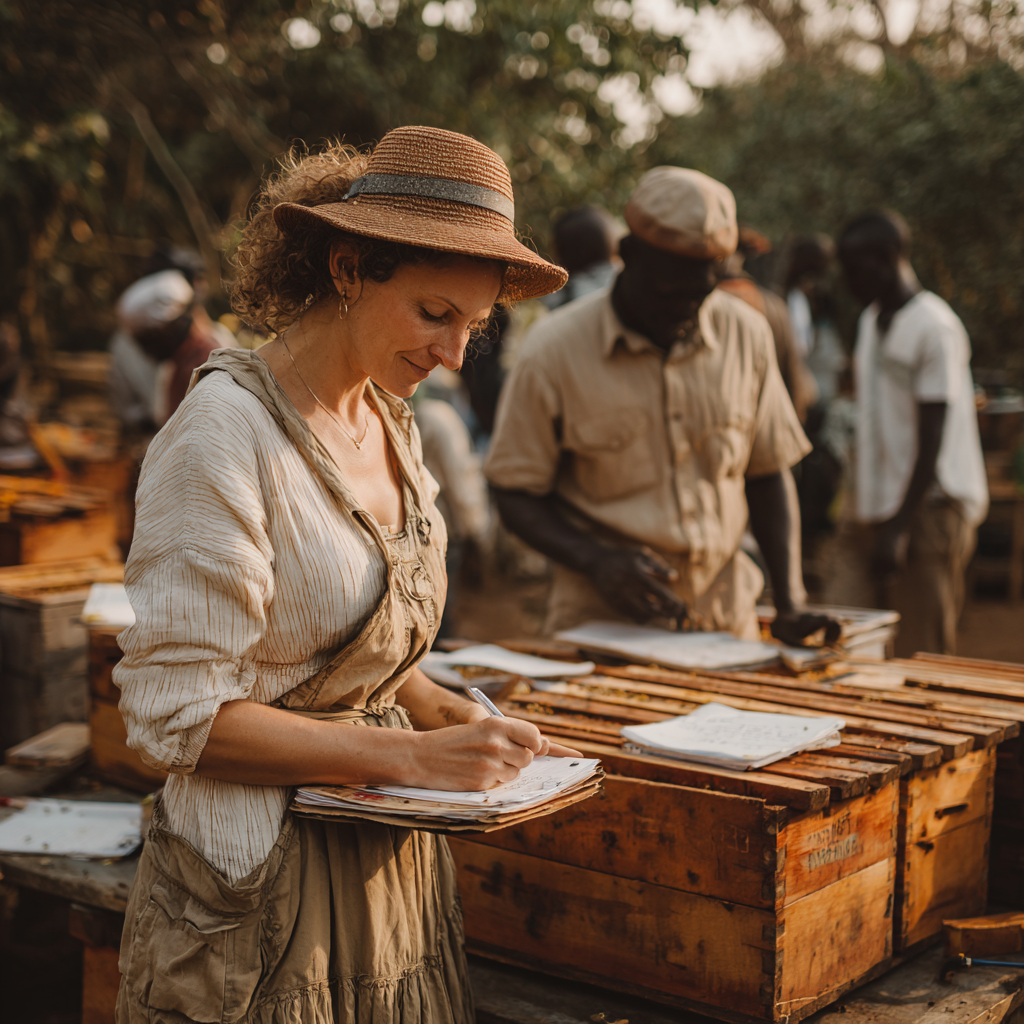
When we document our costs—openly, with receipts—we create benchmarks that didn't exist before:
- Future buyers can reference our data
- Producers can justify fair pricing
- Partners can negotiate from information, not ignorance
- The entire ecosystem moves toward rational pricing
We're not publishing this to embarrass anyone. We're publishing it because the absence of this data is what allows pricing opacity to persist.
If we had access to a database showing "Kenyan hive, Kongo-Central, 2022: $60–80" when we started, we might have negotiated differently. That database didn't exist. Now it does—because we're building it.
What We're Doing About It
This isn't a post about giving up. It's a post about correcting course.
Here's our revised approach:
1. Realistic yield expectations We're now planning around 10–15 liters/hive/year, not 100 kg. That means 1,200+ hives for 10 tons, not 100.
2. Colony multiplication investment We're exploring controlled queen rearing and colony splitting—not just wild capture. This requires training our on-farm beekeepers to do insemination without our lead beekeeper always present.
3. Indepandant suppliers partnership We're in discussions with various small scale organizations, like one in DRC which has 750,000+ acacia trees in the Bandundu area. Acacia honey commands premium prices, and US supply hit an all-time low in 2024. If we can pilot 1,200 hives on their land, we can produce 10 tons/year at scale—but only if we solve the colony bottleneck first.
4. Knowledge transfer model For every experienced beekeeper we bring from Kongo-Central, we train 3 beekeepers on our farms in Bandundu. The goal: build local capacity for colony multiplication, not dependence on one expert.
5. Accountability structure Our lead beekeeper returns to the farm next week with a 75-day mandate to colonize 35 additional hives. We've introduced a penalty structure: $10 deducted per hive not colonized. This isn't punishment—it's alignment. The old model had no consequences for underproduction. The new model does.
What This Means for Buyers
If you're sourcing African honey—or considering it—here's what you need to understand:
1. Volume claims require scrutiny. When an African supplier says they can deliver 10 tons, ask: How many hives? What's the colonization rate? What's the realistic per-hive yield? Do the numbers add up?
2. The constraint is colonies, not land. DRC has more forest than almost any country on earth. The bottleneck isn't where to put hives. It's how to fill them with bees.
3. Scaling requires capital for colony multiplication. This is not grant money for "cooperative strengthening." This is investment in queen rearing, artificial insemination training, and nursery hive infrastructure. Most African beekeeping operations don't have it, and there's not enough domestic demand for it.
4. Timeline expectations should be conservative. If a producer is starting from wild capture, expect 2–3 years to reach meaningful volume. Anyone promising faster is either already scaled (rare) or overpromising.
The Honest Summary
We, Lubembo Aggregrator, built 120 hives. We colonized 65. We expected 10 tons. We produced 40 liters. We paid $100/hive when the real price was $60.
Two failures. One lesson: The real risk in African agribusiness is not overpaying once or underproducing once—it's never learning what the fair price or realistic yield should have been.
African beekeeping doesn't fail because of land, climate, or tools. It fails because:
- Colony multiplication is slow, manual, and under-capitalized — while production expectations are borrowed from Western models that don't apply.
- Pricing opacity punishes early operators — and the absence of benchmarks means everyone learns the hard way, alone.
The NGO system trained beekeepers to celebrate any output and accept any price. The commercial system requires predictable volume and documented costs. These are different games with different rules.
We're now playing the commercial game. That means:
- Realistic yields (10–15 liters/hive, not 100 kg)
- Colony multiplication as the priority investment
- Accountability structures that reward production
- Producer/supplier partnerships that provide land and scale
- Published benchmarks so the next operator doesn't pay $100 for a $60 hive
Why We're Publishing This
This post isn't comfortable to write. We're documenting a 99.4% production miss and a 40% overpayment. That's not a success story.
But the absence of this data is part of what makes African agribusiness so difficult to enter. Every operator learns the same lessons in isolation—paying the same "first-mover tax," making the same yield assumptions, trusting the same NGO-derived benchmarks.
Lubembo Intel, we exists to change that.
When we document our costs—openly, with receipts—we create benchmarks that didn't exist before. When we publish our failures, we compress the learning curve for everyone who comes after us.
If you had read this post in 2022, you might have:
- Questioned the 100 kg/hive yield assumption
- Negotiated the $100/hive price against the $60 benchmark
- Budgeted for colony multiplication, not just hive construction
- Set realistic timelines for production ramp-up
That's the value of transparency. Not blame. Not exposé. Just data, documented honestly, so the ecosystem can mature.
Coming Next: The Aggregation Economics
This post covered why African beekeeping struggles to scale at the production level. The next question is: once you have honey, what does it actually cost to aggregate, process, and export?
That's a paid Lubembo Intel report—covering:
- Cost per kg from farm gate to FOB
- Quality testing and certification requirements
- Buyer price expectations vs producer economics
- The margin math for different markets (EU vs US vs Middle East)
If you're a producer, buyer, or investor in African honey, that report will show you where the money is—and where it isn't.
Lubembo Intelligence is an operator-led market intelligence platform for African agribusiness. We learn in public. We document our costs. We publish what works and what doesn't—because the absence of this data is what keeps African agriculture informal, opaque, and difficult to scale.
The numbers in this post are real. The failures are real. And the benchmarks are now public.


