

Receipt-backed breakdown of a 2.2-ton honey export from Kinshasa to Miami. Real costs, real documents, real lessons—$14,328 landed.
How I Exported 2.2 Metric Tons of Honey from the DRC to Miami—With Every Expense and Receipt
Executive Takeaway
On October 2024, Lubembo completed its first honey export: 4,176 glass jars (2,245 kg) from Kinshasa to Miami via Istanbul. Total landed cost: $14,328, or $6.38 per kilogram and we sell each jar in the USA for $20/250ml.
Three things stood out:
- Air freight consumed 68% of total cost ($9,793). Our volume was too low for sea freight minimums, forcing us onto Turkish Airlines via a Kinshasa forwarder. At $4.32/kg, this is the single largest lever for future cost reduction.
- US-side compliance and clearance cost $2,887 (20% of total)—split between FDA registration ($1,300/year via Registrar Corp) and customs brokerage/drayage ($1,587). Without the FDA/DUNS number, goods cannot board the plane or clear US customs. Most first-time exporters underestimate this.
- We lost $400 to a scam at N'djili Airport. Someone claimed we needed a "government caution" for phytosanitary approval. False. The only documents required for DRC food export are OCC certification and the SQAV phytosanitary certificate. Lesson paid in cash.
This post breaks down every line item, shares the documents, and extracts the operational lessons so you don't repeat our mistakes.
Lubembo Trades works with organic African farmers in superfoods (Honey, hibiscus, moringa, baobab), while securing traceability of production to key bulk buyers in Gulf Arabia, USA, and selective in the EU market. While our Direct-to-Consumer products sold mostly to premium clientele in the USA. To source from us visit: https://lubembo.co/
At-a-Glance Numbers
| KPI | Value |
|---|---|
| Total shipment weight | 2,245 kg (2.245 MT) |
| Total units | 4,176 glass jars / 174 cartons |
| Total landed cost (USD) | $14,328 |
| Cost per metric ton | $6,381/MT |
| Cost per kilogram | $6.38/kg |
| Air freight rate | $4.32/kg (chargeable weight) |
| Route | FIH → IST → MIA |
| Carrier | Turkish Airlines (TK 0548) |
| Transit time | ~3 days (Kinshasa → Miami) |
| Export date | October 25–26, 2024 |
| US arrival | October 29, 2024 |
Top 5 Cost Drivers
| Rank | Category | Amount (USD) | % of Total |
|---|---|---|---|
| 1 | Air freight (cargo + AWB + TOC) | $9,793 | 68.4% |
| 2 | US customs clearance + drayage | $1,587 | 11.1% |
| 3 | FDA/DUNS registration (Registrar Corp) | $1,300 | 9.1% |
| 4 | DRC export compliance (OCC + phyto + formality + scam) | $1,330 | 9.3% |
| 5 | DRC airport logistics (warehouse + handling + entry) | $317 | 2.2% |
Cost Waterfall (text-based):
Procurement           →  $0 (honey already sourced; not in this analysis)
Packaging/prep        →  $1
DRC local logistics   →  $317 (warehouse $225, handling $70, entry/parking $22)
DRC export/admin      →  $1,330 (OCC $200, phyto $350, formality $380, scam $400)
International freight →  $9,793 (cargo $9,698, AWB $45, TOC $50)
US compliance         →  $1,300 (FDA/DUNS registration)
US customs/last mile  →  $1,587 (broker $200, duties $43, bond $50, drayage $1,050, fees $244)
────────────────────────────────────────────────────────────────────────────
TOTAL LANDED          →  $14,328
The Shipment in One Page
What happened, in sequence:
Week 1: Sourcing & consolidation (prior to Oct 22) Honey was aggregated from our farm in Bandundu area sector suppliers and packed into 174 cartons of glass jars (24 jars/carton average). Total: 4,176 jars, 2,245 kg gross weight. Product was transported to Kinshasa for export processing.
Oct 22: Forwarder engagement We engaged ETS WWC as our freight forwarder. Payment of $10,000 was wired via Rawbank to secure cargo space on Turkish Airlines routing FIH–IST–MIA. ETS WWC handled cargo booking, documentation coordination, and airport handling.
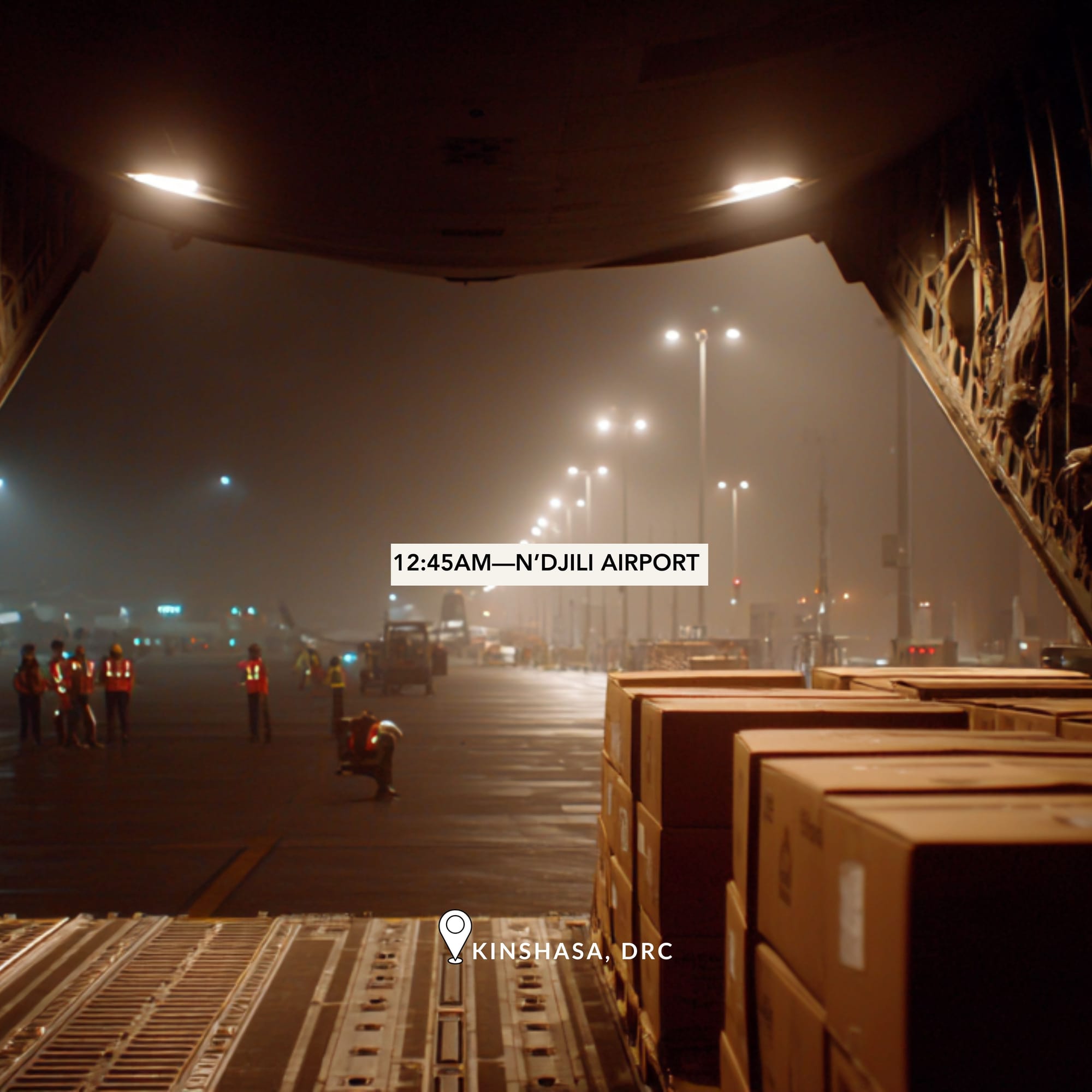
Oct 25: Export documentation & airport processing At N'djili Airport, we completed:
- OCC (Office Congolais de Contrôle) lab inspection: $200
- SQAV phytosanitary certificate: $350
- Airport warehouse staging: $225
- Entry permits and parking: $22
- Handling and laisser-passer: $70
We also paid $400 for a "caution pour documents phytosanitaires" that turned out to be fraudulent—someone at the airport claimed it was required. It was not.
Oct 25–26: Export clearance DGDA (customs) issued the embarkation authorization (N° XX0). OCC issued the border control report (N° YYYY0). SQAV issued the food inspection certificate (N° 00XX) and acceptance note (N° 01YY). All documents referenced AWB 243-XXXXXXX.
Oct 26–27: International transit Cargo departed Kinshasa on TK 0548 (Oct 26), transited Istanbul, and arrived Miami International Airport on Oct 27–29.
Oct 29: US customs clearance CD Ship's Agent (San Diego) handled customs entry as our broker. Entry number: XXX-0008668-X. Clearance included:
- Broker fee: $200
- Customs duties: $42.66
- Single entry bond: $50
- FDA handling: $75
- Drayage to final destination: $1,050
- Other fees: $169.24
Nov 13: Final delivery Goods released and delivered to consignee (Lubembo LLC, initially Sacramento address, final destination Miami).
Total elapsed time: Approximately 18 days from forwarder engagement to final delivery.
The Cost Anatomy (With Receipts)
Below is the complete extracted expense table from our records. All amounts in USD unless noted.
Full Expense Table
| Date | Vendor / Payee | Category | Amount (USD) | Notes |
|---|---|---|---|---|
| 10/22/2024 | ETS WWC | Freight (air) | $9,698.00 | 2,245 kg × $4.32/kg chargeable weight |
| 10/22/2024 | ETS WWC | Export admin | $380.00 | Formality fees (frais de formalité) |
| 10/25/2024 | N'djili Airport | Customs/entry | $22.00 | Quittances d'entrée + parking |
| 10/25/2024 | N'djili Airport | Labor/handling | $70.00 | Manutention et laisser-passer (informal) |
| 10/25/2024 | N'djili Airport | Storage | $225.00 | Airport warehouse (entrepôt) |
| 10/25/2024 | Unknown (Scam) | Export admin | $400.00 | "Caution phytosanitaire"—fraudulent charge |
| 10/25/2024 | OCC | Export admin | $200.00 | Lab inspection certificate |
| 10/25/2024 | Misc | Packaging | $1.00 | Scotch tape |
| 10/28/2024 | ETS WWC | Freight (air) | $45.00 | AWB fees |
| 10/28/2024 | ETS WWC | Freight (air) | $50.00 | TOC (Terminal Origin Charges) |
| 10/29/2024 | SQAV (via Exauce) | Export admin | $350.00 | Phytosanitary certificate |
| 11/13/2024 | CD Ship's Agent | Customs/clearance | $1,586.90 | US broker + duties + drayage (breakdown below) |
| Annual | Registrar Corp | Export admin | $1,300.00 | FDA Facility Registration + DUNS # |
| TOTAL | $14,327.90 |
US Customs Invoice Breakdown
| Line Item | Amount (USD) |
|---|---|
| Fee #055 (processing) | $74.24 |
| Single Entry Bond | $50.00 |
| Duties / US Customs | $42.66 |
| Delivery Order | $20.00 |
| FDA Handling | $75.00 |
| RLF Entry Fee | $75.00 |
| Broker Fee / Professional Services | $200.00 |
| Drayage | $1,050.00 |
| Total | $1,586.90 |
Surprising Costs Most Exporters Miss
1. FDA/DUNS registration ($1,300/year) This is non-negotiable for food exports to the US. Without it, your goods will not board the aircraft in Kinshasa, and they will not clear customs in Miami. Registrar Corp handles the FDA Prior Notice, facility registration, and DUNS number. Budget this before your first shipment.
2. Drayage in Miami ($1,050) Moving cargo from the airport to your warehouse or 3PL is expensive. This single line item was 7% of our total landed cost. If you're shipping to Miami regularly, negotiate a standing rate with a local trucking company.
3. The "informal" payments ($70 handling) Airport handling in Kinshasa includes some payments that don't come with formal receipts. These are small but real. Budget 1–2% of your DRC-side costs for undocumented friction.
Operational Lessons (DRC-Specific, Transferable)
- Volume threshold for sea freight is ~28 MT/20 ft container minimum. At 2.2 MT, we were forced into air. Sea freight would cut our per-kg rate from $4.32 to under $1.00—but only if you can consolidate enough volume as right now few sea freight do 'groupage' to USA so you need your own container.
- Turkish Airlines via Istanbul is the default DRC–USA air route. Direct flights don't exist. Plan for 2–3 day transit via IST. ETS WWC and similar forwarders have standing relationships with Turkish Cargo.
- OCC + SQAV = the two mandatory DRC food export documents. Office Congolais de Contrôle (OCC) handles quality/lab certification. Service de Quarantaine Animale et Végétale (SQAV) handles phytosanitary. Anyone asking for additional "cautions" at the airport is likely running a scam.
- The $400 scam was a classic airport gatekeeper play. When someone in a uniform at the airport says you need to pay before your goods can move, ask for the official tariff schedule and the receipt number format. If they can't produce it, walk away and find a supervisor.
- Declared value matters for customs duty calculation. We declared $1,500 FAS value (valeur déclarée par le client). US duties were $42.66—about 2.8% of declared value. Undervaluing triggers audits; overvaluing increases duty. Be accurate.
- Your forwarder relationship is your most valuable DRC asset. ETS WWC handled booking, documentation coordination, and airport liaison. A good forwarder saves you days of running between offices. Pay their fees; they're worth it. No, not all of them are scammers, ETS WWC was great and we intend to use them moving forward.
- FDA Prior Notice must be filed before cargo lands. This is handled by Registrar Corp as part of the annual fee. If you're doing this in-house, file 15+ days before arrival to avoid clearance delays. I find the FDA too bureaucratic, I'd rather pay a third party to guide me through FDA compliance. Just like I'd rather pay a forwarder in DRC then deal with ports, same service different continent.
- Single entry bonds are fine for occasional shipments. At $50 per entry, this is cheaper than a continuous bond ($500+/year) unless you're shipping 10+ times annually.
- Drayage quotes vary wildly. $1,050 for airport-to-warehouse in Miami is on the high end. Get 3 quotes before your next shipment.
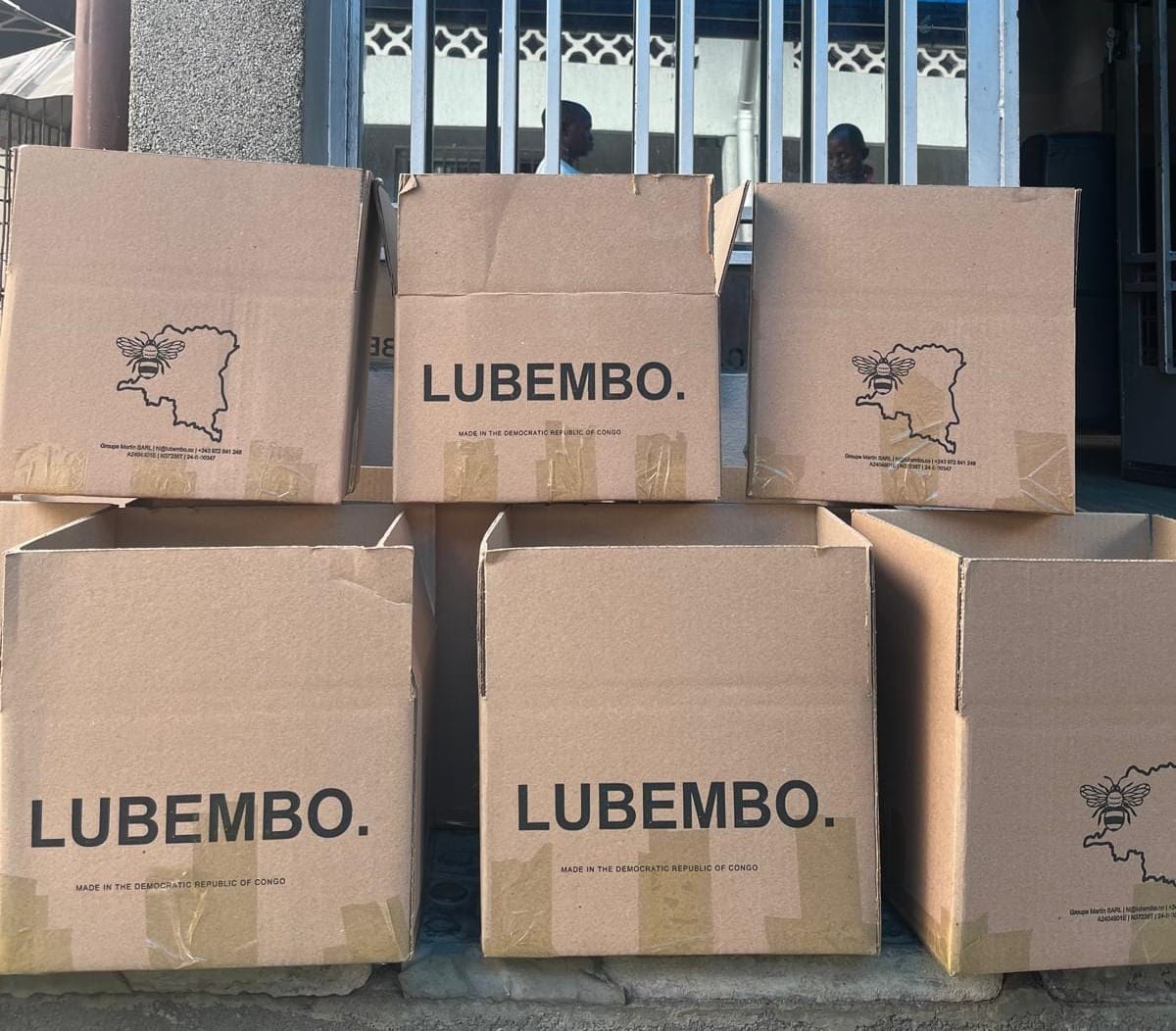
- Glass jars add weight and breakage risk. Our 4,176 jars averaged ~540g each including honey. Plastic packaging would reduce weight by 15–20% and eliminate breakage concern—but may affect perceived quality for premium positioning.
What I Would Do Differently Today
1. Risk controls: Verify every payment request against official tariff schedules. The $400 scam was avoidable. Before paying anyone at the airport, ask: "What is the receipt number format? Where is this published?" Legitimate government fees have documented rates.
2. Vendor terms: Negotiate drayage in advance. We accepted the first drayage quote under time pressure. For future shipments, we'll secure 2–3 standing quotes before cargo lands.
3. Documentation: Digitize everything before export. We had some scrambling to locate documents during US clearance. Going forward: every certificate, receipt, and permit gets scanned and uploaded to cloud storage the day it's issued.
4. Freight strategy: Consolidate to hit sea freight minimums. At 10+ MT, sea freight becomes viable at ~$0.80–1.20/kg. That would drop our freight cost from $9,793 to ~$2,000–2,700. This requires either (a) larger single orders, or (b) consolidating multiple buyers' orders.
5. Packaging strategy: Test food-grade plastic containers. Glass jars are premium but heavy. A 20% weight reduction on 2,245 kg = 449 kg saved = ~$1,940 in air freight savings at current rates. Worth testing for bulk/wholesale channels.
Templates You Can Copy (FREE)
(A) Simple Expense Tracker Structure
Use this format for any export shipment:
| Date | Vendor/Payee | Category | Currency | Amount (Local) | Amount (USD) | Receipt? | Notes |
|---|---|---|---|---|---|---|---|
| Y/N |
Categories to use:
- Honey procurement
- Packaging
- Labor
- Local transport
- Storage/warehouse
- Export admin/compliance
- Customs/clearance
- Freight (air/sea)
- Insurance
- Banking/FX
- Taxes/fees
- 3PL/last-mile
- Misc
KPIs to calculate:
- Total cost (USD)
- Cost per MT (USD/MT)
- Cost per kg (USD/kg)
- Top 5 cost drivers (% share)
(B) Document Checklist for DRC Food Export
Before cargo leaves your facility:
- Packing list (number of cartons, gross weight, net weight)
- Commercial invoice (declared value, HS code)
- Certificate of origin (if required by destination)
At N'djili Airport / Export point:
- OCC certificate (Office Congolais de Contrôle) — lab/quality inspection
- SQAV phytosanitary certificate — food safety clearance
- SQAV Note d'Acceptation — final export approval
- DGDA embarkation authorization — customs exit permit
- OCC Rapport de Contrôle du Trafic Frontalier — border control report
- Air Waybill (AWB) — issued by carrier/forwarder
For US import (food products):
- FDA Facility Registration (via Registrar Corp or direct)
- DUNS number
- FDA Prior Notice (filed before arrival)
- Commercial invoice
- Packing list
- Air Waybill
- Phytosanitary certificate from origin country
(C) Pre-Shipment Checklist
7 days before export:
- Confirm forwarder booking and flight dates
- Verify FDA registration is active
- File FDA Prior Notice (if not handled by Registrar Corp)
- Confirm US customs broker is engaged
- Obtain drayage quotes for destination
3 days before export:
- Complete OCC inspection
- Obtain SQAV phytosanitary certificate
- Confirm all export documents are in order
- Wire forwarder payment (if not prepaid)
- Scan and upload all documents to cloud storage
Day of export:
- Deliver cargo to airport warehouse
- Obtain DGDA embarkation authorization
- Collect final stamped documents (OCC border report, SQAV acceptance note)
- Confirm AWB issuance and tracking number
- Notify US broker of shipment departure
Upon US arrival:
- Monitor customs clearance status
- Respond to any FDA or CBP queries within 24 hours
- Confirm drayage pickup appointment
- Verify delivery to final destination
Next: The Paid Deep Dive
This free post gave you the full cost anatomy and operational lessons from our first honey export.
The paid post (coming at the end of the month) goes deeper:
- Full unit economics model: What gross margin do you need per jar to make DRC honey exports viable? We'll share our pricing model with sensitivity analysis on freight, FX, and spoilage.
- Supplier contracting playbook: How we structure agreements with Bibwa sector honey producers—payment terms, quality specs, and volume commitments.
- Freight negotiation scripts: The exact emails and talking points we used to get West Wings Congo to $4.32/kg, and how to push for better rates at higher volumes.
- DRC export compliance checklist (expanded): 20+ line items with responsible agencies, typical costs, and turnaround times—plus the contacts that actually answer.
Paid subscribers get the templates, the models, and the contacts.
If this breakdown was useful, subscribe to Lubembo Intel. Free posts deliver real numbers. Paid posts deliver the playbooks. Subscribe now


